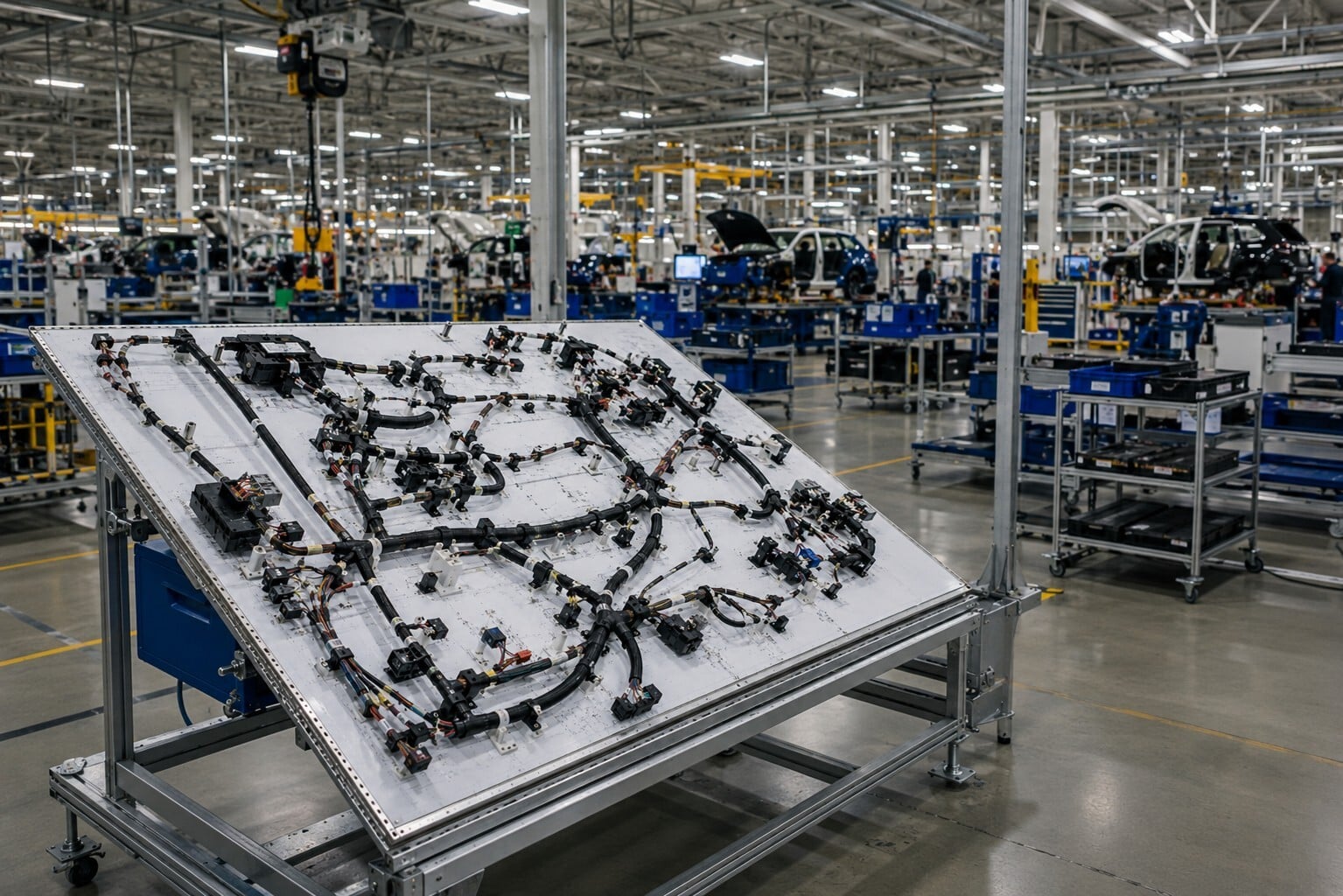
Industrial equipment depends on reliable electrical connections. Whether the product is a control panel, automated machine, power system, sensor-based device, or production line component, wiring must be organized, protected, and repeatable from one unit to the next.
That is where industrial wire harness manufacturing becomes important.
For OEM purchasing and supply chain teams, a wire harness is not just a group of wires. It is a production-critical assembly that can affect installation time, product reliability, serviceability, quality consistency, and long-term supplier performance.
Sanbor Manufacturing supports OEMs with wire harness assembly, cable assembly, PCBA manufacturing, and broader contract manufacturing services designed to simplify sourcing and support scalable production.
What You'll Learn
In this article, we’ll cover:
- Why industrial equipment often requires custom wire harness assembly
- How routing and layout affect reliability, installation, and serviceability
- What OEMs should evaluate when choosing a wire harness supplier
- Why testing, labeling, and documentation matter in industrial applications
- How better harness planning supports repeatable production
Industrial wire harness manufacturing helps OEMs organize, route, and protect electrical connections inside machinery, control systems, automation equipment, and other industrial products. A strong wire harness supplier should support design review, routing, material selection, labeling, testing, documentation, and repeatable production.
Why Wire Harnesses Matter in Industrial Equipment
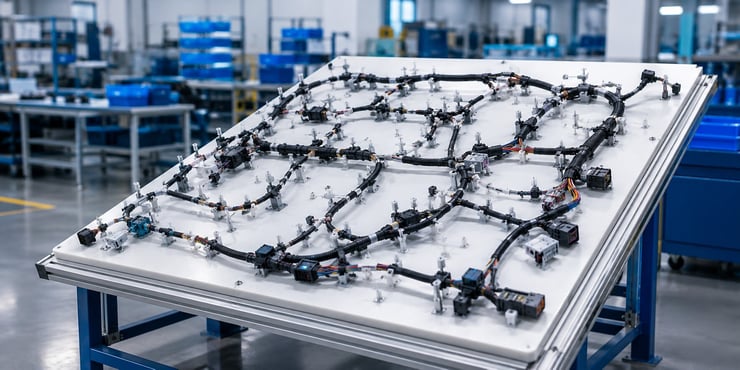
Industrial equipment often includes motors, sensors, power supplies, controllers, switches, relays, displays, and PCBAs. A wire harness organizes these connections into a defined layout so the product can be assembled consistently.
Without a well-designed harness, manufacturers may face inconsistent routing, wiring errors, longer installation time, difficult service access, and higher quality risk.
A custom wire harness assembly helps OEMs improve:
- Electrical organization
- Assembly efficiency
- Connection reliability
- Routing consistency
- Field serviceability
- Quality control
- Production repeatability
For OEMs comparing cable and harness requirements, Sanbor’s article on cable assembly vs. wire harness assembly explains the practical differences between these two related assembly types.
Routing Is a Reliability Issue
Wire harness routing is not just a design detail. It can directly affect product reliability.
Industrial equipment may expose wiring to vibration, heat, abrasion, movement, moisture, dust, oils, chemicals, or electrical noise. Harness routing must account for these conditions before production begins.
Important routing factors include:
- Bend radius
- Branch locations
- Connector orientation
- Mounting points
- Strain relief
- Separation from heat sources
- Protection from sharp edges
- Service access
- Clearance around moving parts
When these details are not addressed, wiring can become stressed, pinched, misrouted, or difficult to install. In some cases, routing issues may not appear until the equipment is in use.
Recent research on industrial cabling has also highlighted the complexity of routing cables in constrained industrial environments, where space limitations, tolerances, and production integration can all affect assembly feasibility. Industrial cabling in constrained environments remains a practical challenge for many equipment designs.
Repeatability Reduces Production Risk
For OEM buyers and supply chain teams, repeatability is one of the biggest advantages of working with the right wire harness supplier.
A repeatable harness design helps ensure each unit is built the same way, routed the same way, and tested against the same requirements. This is especially important when production scales or when multiple operators, shifts, or facilities are involved.
Repeatability depends on:
- Accurate drawings
- Clear specifications
- Defined materials
- Controlled revisions
- Harness boards or fixtures
- Standardized work instructions
- Consistent labeling
- Documented testing
- Supplier communication
Sanbor’s guide on design for manufacturability explains how early manufacturing input can help reduce cost, improve quality, and avoid production delays across cable assembly, wire harness, and PCBA programs.
Materials and Components Should Match the Application
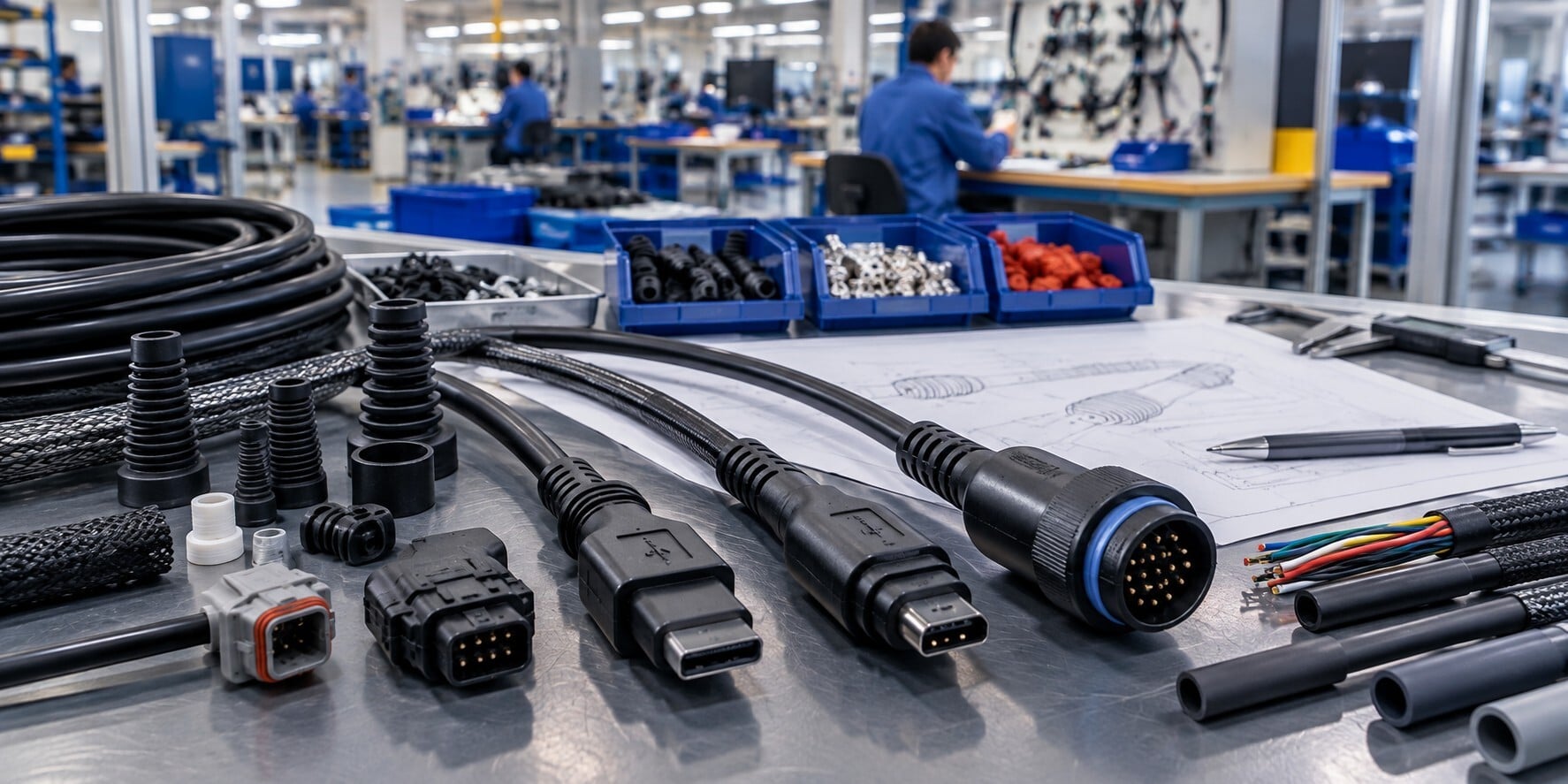
Industrial wire harness manufacturing requires careful material selection. The right wire, terminals, connectors, sleeves, labels, and protective coverings depend on how the equipment will operate.
OEMs should consider:
- Current and voltage requirements
- Wire gauge and insulation
- Connector availability
- Terminal selection
- Sleeve or loom protection
- Shielding needs
- Temperature exposure
- Vibration or flexing
- Chemical or moisture exposure
- Labeling and identification needs
A wire harness supplier should be able to review these details before production and identify potential sourcing, performance, or manufacturability risks.
For related material selection considerations, Sanbor’s article on cable assembly materials covers connectors, shielding, jackets, and strain relief decisions that can also apply to industrial harness programs.
Testing and Quality Controls Matter
Industrial OEMs need wire harnesses that are built correctly and perform consistently. Testing and inspection should be defined before quoting and production.
Depending on the application, testing may include:
- Continuity testing
- Shorts and opens testing
- Hipot testing
- Pull testing
- Visual inspection
- Dimensional inspection
- Connector verification
- Functional testing
Workmanship expectations may also reference IPC/WHMA-A-620 requirements for cable and wire harness assemblies, an industry-consensus standard for cable and wire harness assemblies.
For purchasing and supply chain teams, clear testing requirements help reduce quote ambiguity and make supplier comparisons more accurate.
What OEMs Should Look for in a Wire Harness Supplier
Choosing a wire harness supplier should involve more than comparing unit price. For industrial equipment programs, OEMs should evaluate whether the supplier can support quality, repeatability, documentation, and production needs.
Key questions include:
- Can the supplier build to the required drawings and specifications?
- Can they support custom wire harness assembly for industrial applications?
- How do they manage connector and component sourcing?
- What testing is included?
- How are revisions controlled?
- Can they support related cable assembly or PCBA needs?
- How do they communicate sourcing or production risks?
- Can they scale with the program?
For OEMs preparing to quote a harness program, Sanbor’s guide on RFQ preparation for cable assemblies, wire harnesses, and PCBAs outlines the information buyers should include to improve quoting accuracy and supplier evaluation.
Final Takeaway
Industrial wire harness manufacturing plays a direct role in equipment reliability, production efficiency, and long-term serviceability. The right harness design can simplify installation, reduce wiring errors, improve routing consistency, and support repeatable manufacturing.
For OEM supply chain, purchasing, and engineering teams, the best results come from involving a wire harness supplier early enough to review routing, materials, testing, documentation, and production expectations.
If your team is sourcing wire harnesses for industrial equipment, contact Sanbor Manufacturing to discuss your drawings, specifications, production volume, and supplier requirements.
FAQ: Industrial Wire Harness Manufacturing
What is industrial wire harness manufacturing?
Industrial wire harness manufacturing is the process of building organized wire, cable, connector, terminal, and protective covering assemblies for industrial equipment. These harnesses help route electrical connections through machinery, control systems, automation equipment, power systems, and other OEM products.
Why do industrial OEMs use custom wire harness assemblies?
Industrial OEMs use custom wire harness assemblies to improve routing consistency, reduce wiring errors, simplify installation, support serviceability, and create repeatable production. Custom harnesses are designed around the equipment’s electrical, mechanical, environmental, and production requirements.
What should OEMs look for in a wire harness supplier?
OEMs should look for a wire harness supplier that can support drawings, specifications, material sourcing, routing review, labeling, testing, documentation, revision control, and scalable production. The supplier should also understand the operating environment and quality expectations of industrial equipment programs.
Why is routing important in industrial wire harness design?
Routing affects reliability, installation, service access, and long-term performance. Poor routing can expose wires to vibration, heat, abrasion, sharp edges, moving parts, or electrical noise. A well-planned harness layout helps protect connections and keeps assembly consistent from unit to unit.
What testing is used for industrial wire harnesses?
Industrial wire harness testing may include continuity testing, shorts and opens testing, hipot testing, pull testing, visual inspection, dimensional inspection, connector verification, and functional testing. The right testing plan depends on the application, risk level, and OEM requirements.
How can OEMs improve wire harness repeatability?
OEMs can improve repeatability by providing accurate drawings, complete specifications, approved BOMs, clear labeling instructions, testing requirements, revision control, and realistic production volumes. Early design and manufacturability review can also help reduce variation during production.