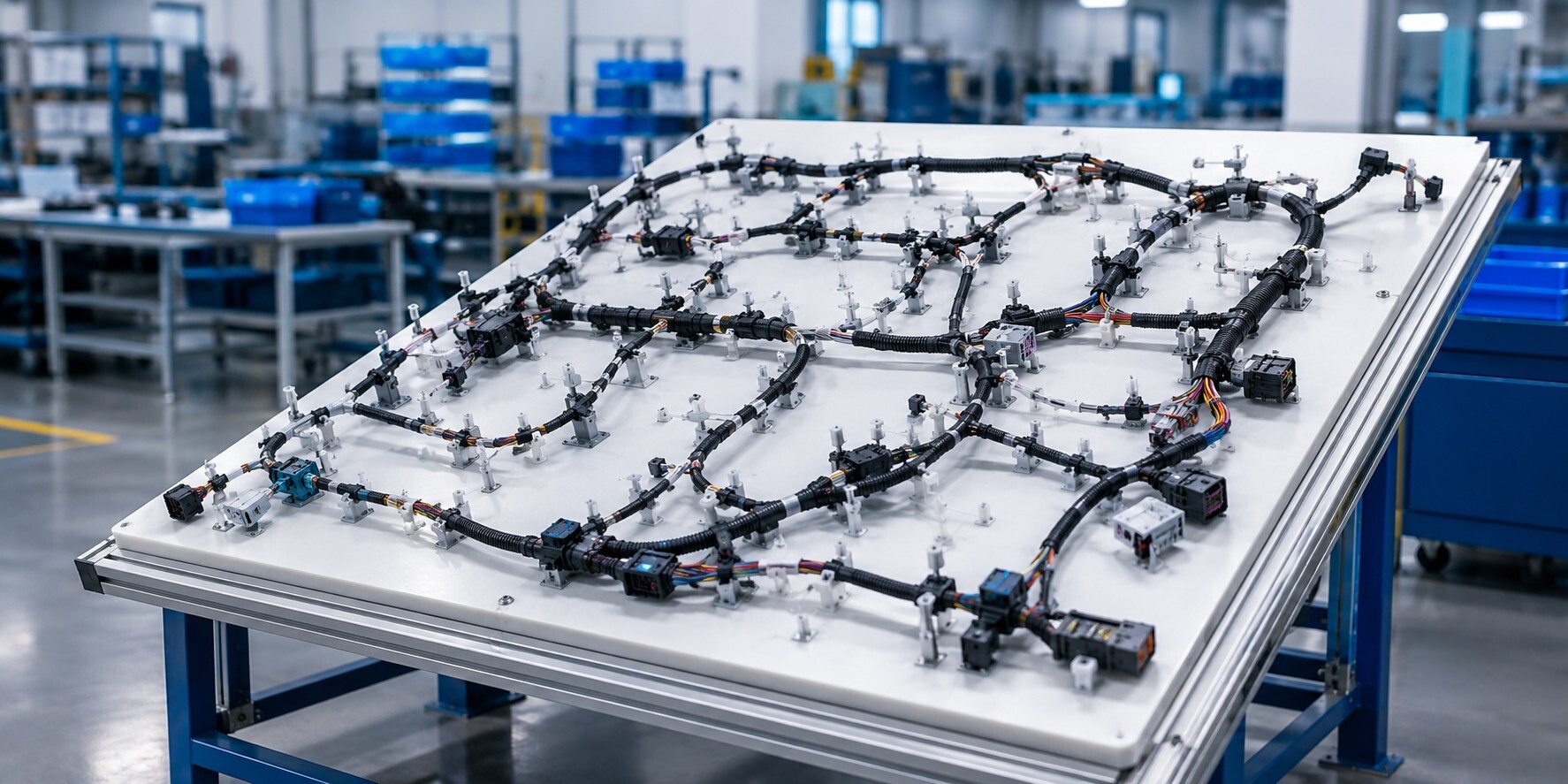
Automotive and transportation equipment rely on complex electrical systems. From sensors and lighting to controls, power distribution, safety systems, displays, and electronic modules, wire harnesses help organize and connect the components that keep vehicles and equipment operating reliably.
For OEMs, automotive wire harness manufacturing needs to produce a repeatable, durable, and quality-controlled component that supports demanding applications, changing production volumes, and long-term supplier expectations.
Sanbor Manufacturing supports OEMs with wire harness assembly, cable assembly, PCBA manufacturing, and related contract manufacturing services designed to simplify sourcing and support scalable production.
What You'll Learn
In this article, we’ll cover:
- Why automotive wire harness quality is critical for OEM products
- How routing, materials, testing, and documentation affect performance
- What scalability means in automotive wire harness manufacturing
- What OEMs should evaluate when choosing a wire harness supplier
- How supplier capability can reduce production and supply chain risk
Why Automotive Wire Harness Quality Matters
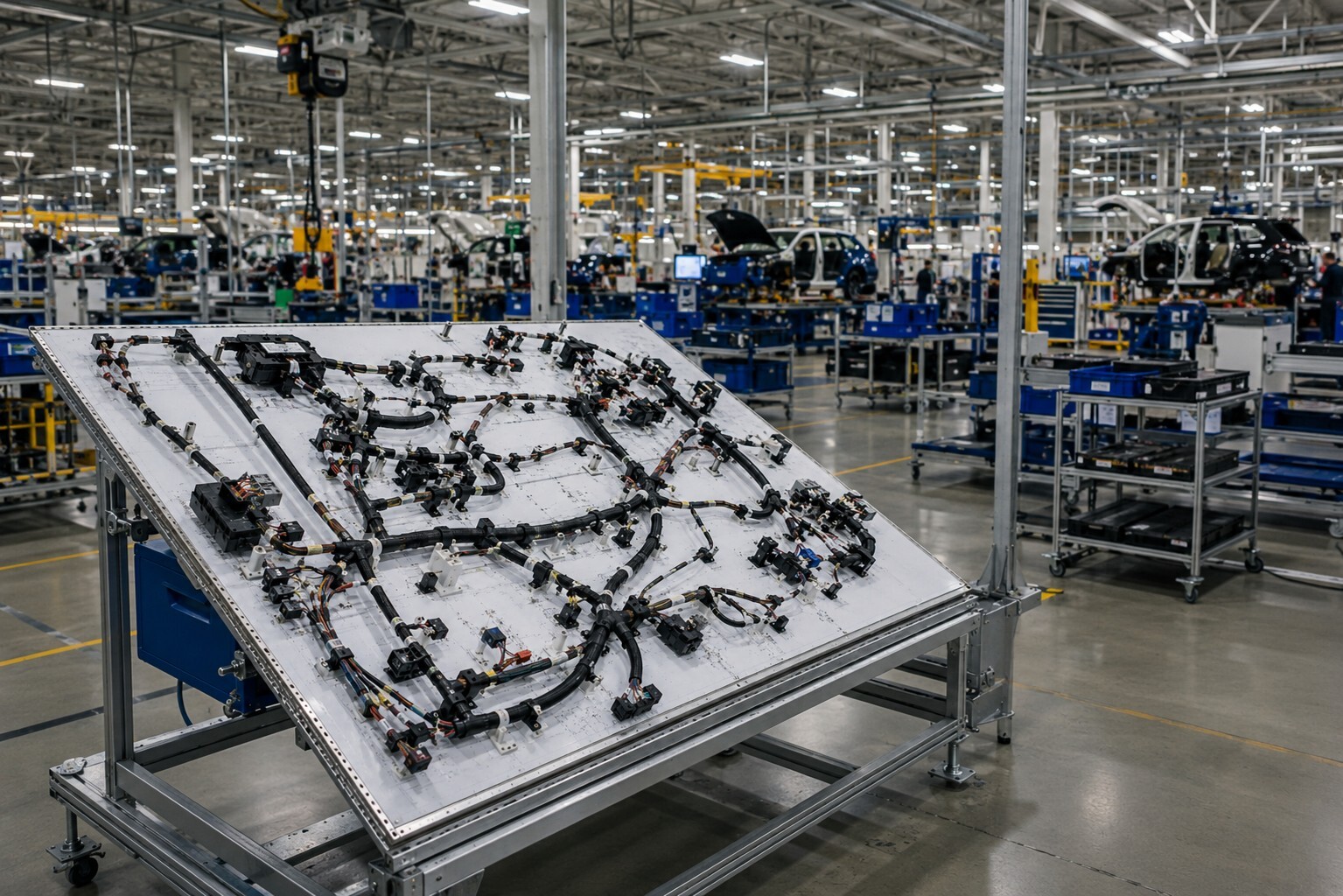
Automotive wire harnesses often operate in demanding environments. Depending on the application, they may be exposed to vibration, temperature changes, moisture, abrasion, electrical noise, tight routing spaces, or repeated mechanical stress.
A harness failure can create issues that are difficult to diagnose and expensive to correct. Poor connector selection, inconsistent routing, weak strain relief, unclear labeling, or inadequate testing can lead to installation problems, intermittent electrical issues, production delays, or field performance concerns.
That is why quality must be built into the process from the start. OEMs should look for controlled materials, clear specifications, documented work instructions, defined inspection requirements, and testing expectations aligned with the application.
For general wire harness assembly quality expectations, OEMs may reference IPC/WHMA-A-620 requirements for cable and wire harness assemblies, which is considered the industry-consensus standard.
Routing and Layout Affect Reliability
Wire harness routing plays a major role in automotive and transportation applications. A harness must fit within the available space, connect to the right components, avoid damage during installation, and perform reliably once the product is in use.
OEMs should consider:
- Harness length and branch points
- Bend radius requirements
- Connector orientation
- Mounting points and clips
- Strain relief locations
- Protection from sharp edges
- Clearance from moving parts
- Exposure to heat, moisture, vibration, or abrasion
- Serviceability and replacement needs
Good routing supports consistent installation and helps reduce wiring errors. Poor routing can increase labor time, create quality issues, or cause failures that only appear after the product reaches the field.
For a broader foundation on how harnesses differ from cable assemblies, see Sanbor’s guide to cable assembly vs. wire harness assembly.
Material Selection Should Match the Application
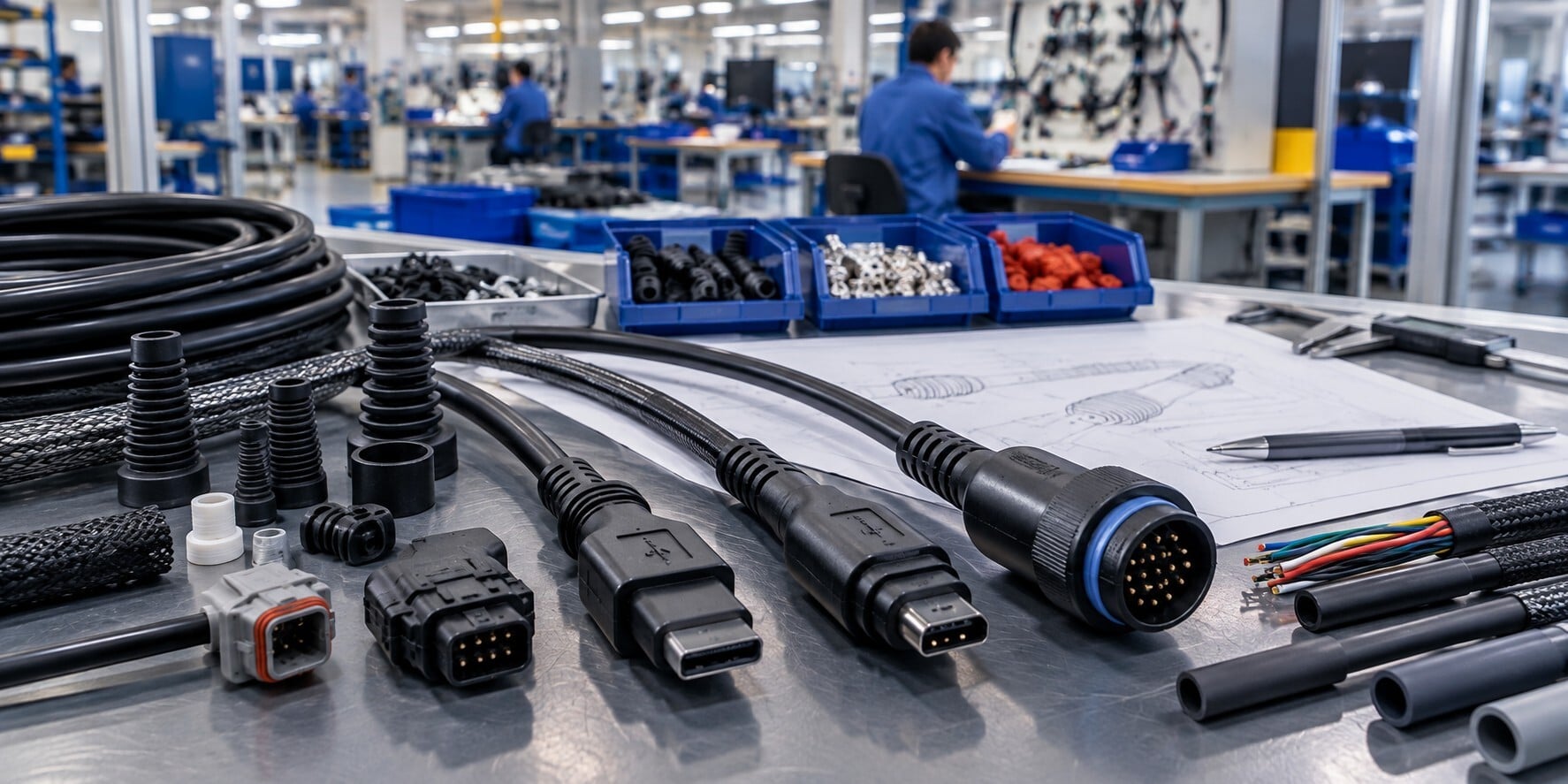
Automotive wire harness manufacturing requires careful material selection. Wire gauge, insulation, terminals, connectors, sleeves, labels, protective coverings, and shielding should all match the operating environment and electrical requirements.
For example, a harness used near a high-heat area may require different materials than one used inside a protected enclosure. A harness carrying sensitive signals may need shielding or separation from power lines. A harness exposed to vibration may require added strain relief, clips, or protective sleeving.
OEMs should also evaluate connector availability and lifecycle status. A technically acceptable connector can still create problems if it is difficult to source, has long lead times, or depends on a limited supply base.
For related material considerations, Sanbor’s article on cable assembly materials explains how connectors, shielding, jacket materials, and strain relief can affect performance and manufacturability.
Testing and Inspection Should Be Defined Early
Testing is an important part of automotive wire harness quality. Requirements should be defined during the RFQ or early production planning stage, not after the program has already been quoted.
Depending on the application, testing may include:
- Continuity testing
- Shorts and opens testing
- Hipot testing
- Pull testing
- Visual inspection
- Dimensional inspection
- Connector verification
- Functional testing
Clear testing expectations help the supplier quote accurately and build the right process controls into production. They also help OEMs compare suppliers on more than unit price.
For automotive-related quality management expectations, OEMs may also consider how supplier processes align with applicable customer requirements and quality system expectations such as IATF 16949 (International Automotive Task Force) for automotive quality management system requirements.
Scalability Requires More Than Capacity
For automotive and transportation OEMs, scalability is not only about whether a supplier can build more units. It is about whether the supplier can maintain quality, documentation, communication, and delivery performance as demand changes.
A scalable wire harness manufacturing partner should be able to support:
- Prototype and pilot builds
- Production ramp-up
- Repeatable assembly processes
- Revision control
- Material planning
- Forecast-based purchasing
- Quality documentation
- Testing and inspection records
- Communication around lead times and sourcing issues
This is especially important when OEMs are moving from engineering builds to recurring production or transferring a program from another supplier.
Sanbor’s article on design for manufacturability explains how early manufacturing input can help reduce cost, improve quality, and avoid production delays across cable assembly, wire harness, and PCBA programs.
Documentation and Revision Control Reduce Risk
Automotive wire harness programs may involve multiple revisions, product configurations, and supplier requirements. Without strong documentation control, small changes can create confusion across purchasing, engineering, quality, and production.
OEMs should confirm how a supplier manages drawings, BOMs, approved components, work instructions, test procedures, inspection records, revision history, nonconformances, and corrective actions.
Strong documentation supports repeatability. It also makes it easier to troubleshoot issues, manage supplier communication, and keep production aligned with current requirements.
What OEMs Should Look for in an Automotive Wire Harness Supplier
When evaluating an automotive wire harness supplier, be sure to look beyond the quoted unit price. The right partner should be able to support both the technical and operational requirements of the program.
Important questions include:
- Can the supplier build to the required drawings and specifications?
- Does the supplier understand automotive and transportation applications?
- Can they support custom wire harness assembly and related cable assembly needs?
- How do they manage component sourcing and lead-time risk?
- What testing and inspection processes are available?
- How are revisions and documentation controlled?
- Can the supplier scale from prototype to production?
- How do they communicate sourcing, quality, or delivery concerns?
For buyers preparing a supplier quote package, Sanbor’s RFQ guide for cable assemblies, wire harnesses, and PCBAs outlines the information OEMs should include to improve quoting accuracy and supplier evaluation.
Final Takeaway
Automotive wire harness manufacturing requires the right balance of quality, routing discipline, material selection, testing, documentation, and scalable production support.
A wire harness by itself is just an electrical connection but is a critical assembly that can affect product reliability, production efficiency, field performance, and supply chain stability.
Sanbor Manufacturing supports OEMs with wire harness assembly, cable assembly, PCBA manufacturing, and related contract manufacturing services designed to simplify sourcing, reduce production risk, and support scalable manufacturing.
If your team is evaluating an automotive wire harness supplier or preparing to quote a new program, contact Sanbor Manufacturing to discuss your drawings, specifications, production volume, and sourcing goals. Our experienced team is here to help.
FAQ: Automotive Wire Harness Manufacturing
What is automotive wire harness manufacturing?
Automotive wire harness manufacturing is the process of building organized wire, cable, terminal, connector, label, sleeve, and protective covering assemblies for automotive and transportation equipment. These harnesses help route electrical power, data, and signals between components inside a vehicle or related system.
Why are wire harnesses important in automotive applications?
Wire harnesses are important because they organize electrical connections, simplify installation, reduce wiring errors, improve routing consistency, and support long-term product reliability. In automotive and transportation equipment, they may connect sensors, controls, lighting, safety systems, power modules, displays, and electronic components.
What should OEMs look for in an automotive wire harness supplier?
OEMs should look for a supplier that can support drawings, specifications, material sourcing, routing review, testing, documentation, revision control, production scalability, and clear communication. The supplier should also understand the operating environment and quality expectations of automotive and transportation applications.
What testing is used for automotive wire harnesses?
Automotive wire harness testing may include continuity testing, shorts and opens testing, hipot testing, pull testing, visual inspection, dimensional inspection, connector verification, and functional testing. The right testing plan depends on the application, risk level, and OEM requirements.
How does routing affect automotive wire harness reliability?
Routing affects how the harness fits, installs, and performs in the final product. Poor routing can expose wires to vibration, heat, abrasion, sharp edges, moving parts, moisture, or electrical noise. Good routing helps protect the harness and supports consistent assembly from unit to unit.
How can OEMs improve automotive wire harness scalability?
OEMs can improve scalability by providing accurate drawings, complete BOMs, defined testing requirements, approved materials, clear labeling instructions, revision control, forecast visibility, and realistic production volume expectations. Early supplier involvement can also help identify manufacturability and sourcing risks before production ramps.