
Changing manufacturing suppliers is a significant decision for any original equipment manufacturer (OEM). Established production programs involve approved components, tooling, documentation, quality requirements, and supplier relationships that can take time and resources to replicate.
However, continuing with an underperforming supplier can create even greater risks.
Recurring quality problems, missed deliveries, increasing costs, and limited manufacturing flexibility can affect an OEM's ability to meet customer expectations and maintain profitability.
For purchasing, engineering, and supply chain teams, the challenge is recognizing when an existing supplier relationship can be improved and when a contract manufacturing transfer becomes the better long-term decision.
What You'll Learn
In this article, we’ll cover:
- Six warning signs that it may be time to change manufacturing suppliers
- When to improve an existing relationship, qualify a second supplier, or transfer production
- How to prepare for a manufacturing transfer without disrupting supply
- What OEMs should evaluate when selecting a new contract manufacturing partner
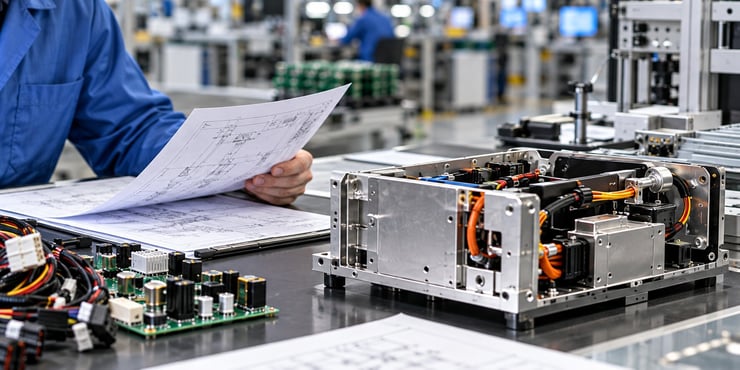
How Do OEMs Know When it's Time to Change Manufacturing Suppliers?
An OEM should consider transferring production when recurring supplier problems create unacceptable risks to quality, delivery, cost, or business continuity and corrective actions have failed to produce sustainable improvement.
The decision should reflect measurable supplier performance, future production requirements, and the cost and risk of transitioning.
A complete supplier replacement is not always necessary. Transferring one product line at a time may provide a more manageable solution.
6 Warning Signs That it May Be Time to Change Manufacturing Suppliers
1. Recurring Quality Problems
Occasional manufacturing defects can occur, but repeated quality issues may indicate weaknesses in process control, inspection procedures, or production consistency.
Warning signs include:
- Increasing defect rates or rejected assemblies
- Repeated corrective actions for the same problems
- Inconsistent quality between production runs
- Inadequate testing or inspection documentation
- Unresolved root causes
These problems can increase rework costs, delay production, and affect product reliability.
A qualified contract manufacturer should demonstrate established quality management processes, appropriate testing, and effective corrective action procedures.
2. Missed Deliveries and Unreliable Lead Times
Consistent delivery performance is critical for maintaining OEM production schedules.
Repeated missed commitments, unexpected shortages, and inaccurate lead-time estimates can create downstream disruptions.
Before changing suppliers, OEMs should determine whether the problem involves component availability, manufacturing capacity, forecasting, or supplier planning.
If delivery performance remains unreliable despite documented corrective efforts, alternative sourcing options deserve consideration.
3. Rising Manufacturing Costs
The lowest quoted unit price does not always represent the lowest total manufacturing cost.
Expedited freight, excess inventory, tariffs, scrap, rework, and production interruptions can all increase the actual cost of an assembly.
OEMs should evaluate total landed cost, production efficiency, and opportunities for design or sourcing improvements.
When manufacturing costs continue to rise without corresponding improvements in quality, service, or capabilities, a supplier evaluation may reveal better alternatives.
4. Limited Manufacturing Capacity or Technical Capabilities
An OEM's manufacturing requirements may evolve as products become more complex or production demand changes.
A supplier that supported an initial program may struggle with additional testing requirements, increased production quantities, integrated assemblies, or new manufacturing technologies.
For example, an OEM purchasing separate cable assemblies and PCBAs may benefit from a partner that can also support electromechanical integration and complete product box builds.
A manufacturing supplier should be evaluated against both current requirements and future program needs.
5. Geographic and Supply Chain Exposure
Reliance on a single manufacturing region can increase exposure to transportation delays, geopolitical uncertainty, and other supply chain disruptions.
The National Institute of Standards and Technology (NIST) emphasizes mapping supplier networks to identify geographic concentrations, critical dependencies, and potential vulnerabilities.
OEMs may benefit from contract manufacturing partners with access to multiple manufacturing regions and flexible material sourcing options.
Sanbor's article on managing BOM risk and component availability explores how better sourcing visibility can reduce production uncertainty.
6. Poor Communication and Limited Visibility
Effective communication is essential to managing manufacturing programs.
Delayed responses, incomplete production updates, limited visibility into component shortages, and unresolved quality concerns make planning more difficult.
A strong manufacturing relationship requires transparency, responsiveness, and proactive problem-solving.
When communication failures consistently affect an OEM's ability to make informed decisions, the supplier relationship may need to be reconsidered.
Should an OEM Transfer Production or Qualify a Second Supplier?
A full manufacturing transfer is not the only way to address supplier performance or supply chain risk.
OEMs generally have three options:
Improve the existing supplier relationship: Appropriate when problems are correctable, the supplier remains technically capable, and performance can improve within an acceptable timeframe.
Qualify a second manufacturing supplier: A dual-sourcing strategy can reduce dependence on one manufacturer while providing additional production flexibility. However, maintaining two approved production sources may introduce additional qualification, tooling, and inventory costs.
Transfer production to a new supplier: A complete transfer may be appropriate when recurring quality, delivery, cost, or capability issues make the existing relationship unsustainable.
Before selecting an approach, OEMs should compare supplier performance, total transition costs, qualification requirements, and the consequences of a production interruption.
A structured supplier evaluation helps ensure that the decision addresses long-term business needs rather than one isolated problem.
OEM Manufacturing Transfer Readiness Checklist
Before transferring production, OEMs should confirm that the new contract manufacturer has the information, resources, and technical capabilities required to reproduce an approved product consistently.
Use this checklist to assess production-transfer readiness:
- Approved technical documentation: Current drawings, specifications, revision history, and assembly instructions are available.
- Bill of materials: Component specifications, approved manufacturers, and sourcing restrictions are documented.
- Tooling and fixtures: Ownership, availability, condition, and transfer requirements are confirmed.
- Quality requirements: Applicable workmanship standards, inspection criteria, and testing procedures are defined.
- Production requirements: Forecasts, order quantities, lead times, and ramp-up expectations are established.
- Qualification plan: First article inspection, pilot production, and customer approval requirements are agreed upon.
- Supply continuity: Inventory, open orders, long-lead components, and transition timing are accounted for.
A complete manufacturing package reduces uncertainty during supplier qualification and quoting.
For additional guidance, see Sanbor's article on preparing an effective manufacturing RFQ for cable assemblies, wire harnesses, and PCBAs.
How Can OEMs Transfer Production Without Disrupting Supply?
A successful manufacturing transfer requires more than sending drawings and placing a purchase order. The objective is to establish a qualified, repeatable manufacturing process with the new supplier before transitioning existing production commitments.
Step 1: Evaluate and Qualify the New Supplier
Review manufacturing capabilities, quality systems, technical resources, capacity, geographic options, and supplier responsiveness.
For cable assemblies and wire harnesses, recognized standards such as IPC/WHMA-A-620 provide applicable workmanship and acceptance criteria.
Step 2: Review Documentation and Manufacturing Requirements
Confirm that the new supplier has access to current engineering documentation, approved components, testing specifications, and necessary tooling.
A design for manufacturability (DFM) review can also identify opportunities to improve assembly efficiency and production consistency.
Step 3: Complete First Article and Pilot Production
Before full production begins, verify that assemblies meet approved specifications.
Depending on the product, qualification may involve first article inspection, functional testing, process validation, or customer-specific approvals.
Pilot production can identify potential problems before larger production commitments begin.
Step 4: Coordinate Inventory and Transition Timing
Evaluate existing inventory, component lead times, outstanding purchase orders, and tooling availability.
A phased production transition, temporary safety stock, or overlapping supplier production may help reduce interruptions.
Step 5: Monitor the Production Ramp-Up
Track agreed performance indicators, including first-pass yield, defect rates, corrective actions, and on-time delivery.
Clear communication among purchasing, engineering, quality, and manufacturing teams supports a more controlled transition.
Choosing a Contract Manufacturing Partner for Long-Term Stability
A manufacturing supplier change should address more than the immediate issue that triggered the evaluation.
OEMs should look for a partner capable of supporting quality expectations, technical complexity, production flexibility, cost management, and future supply chain requirements.
In some cases, reducing the number of separate suppliers can also simplify manufacturing coordination. Sanbor explores this approach in its article on supplier consolidation across PCBAs, cable assemblies, and wire harnesses.
Sanbor Manufacturing supports OEMs across multiple industries with cable assembly manufacturing, wire harness assembly, PCBA manufacturing, plastic injection molding, and complete product box builds.
With manufacturing resources across the U.S., Asia, and Europe, Sanbor helps OEMs evaluate production options based on technical requirements, quality expectations, cost, and geographic flexibility.
Make Supplier Transfers a Strategic Decision
Changing manufacturing suppliers should not be a reaction to one isolated problem.
It should be an informed decision based on supplier performance, production risk, and long-term manufacturing objectives.
Whether an OEM chooses to improve its existing supplier relationship, introduce a second manufacturing source, or complete a full production transfer, the goal remains the same: protect production continuity while improving quality, reliability, and supply chain resilience.
Considering a Manufacturing Supplier Transfer?
Whether your team is experiencing supplier performance challenges, evaluating regional manufacturing alternatives, or preparing to transfer an established production program, Sanbor Manufacturing can help review your requirements and explore potential manufacturing solutions.
Contact Sanbor Manufacturing to discuss your project.
Frequently Asked Questions About Manufacturing Supplier Transfers:
What are the most common reasons OEMs change manufacturing suppliers?
Common reasons include recurring quality problems, missed delivery commitments, rising costs, limited technical capabilities, insufficient production capacity, and geographic supply chain risks.
How long does it take to transfer production to a new contract manufacturer?
The timeline depends on product complexity, documentation, component availability, tooling requirements, testing, and qualification procedures. Simple assemblies may transition relatively quickly, while complex or regulated products can require substantially longer approval and validation periods.
What is the difference between a manufacturing transfer and dual sourcing?
A manufacturing transfer moves production from an existing supplier to a new manufacturer. Dual sourcing qualifies two manufacturing sources for the same product, helping reduce dependence on one supplier while potentially increasing qualification and operational complexity.
What should OEMs look for when choosing a new contract manufacturer?
OEMs should evaluate manufacturing capabilities, quality management systems, inspection and testing procedures, capacity, supply chain resources, communication, and experience supporting similar production requirements.
How can OEMs reduce risks during a manufacturing transfer?
OEMs can reduce risk through complete documentation, early supplier qualification, first article inspection, pilot production, inventory planning, and a controlled production ramp-up with clearly defined performance expectationsp

