For OEM purchasing and supply chain teams, the RFQ process is often the first real test of a potential manufacturing partner. A clear, complete request for quote can lead to better pricing, faster turnaround, fewer follow-up questions, and a more accurate evaluation of supplier fit.
A vague or inaccurate RFQ can do the opposite.
When key details are missing, suppliers are forced to make assumptions that can affect pricing, lead times, material planning, testing, documentation, and production readiness. For cable assemblies, wire harnesses, and PCBAs, even small omissions can create delays or cost surprises later in the sourcing process.
Sanbor Manufacturing works with OEMs across industries that need reliable cable assembly, wire harness assembly, PCBA manufacturing, and broader contract manufacturing support. For buyers, sourcing managers, and supply chain leaders, preparing a stronger RFQ is one of the best ways to start that conversation productively.
What You'll Learn
In this article, we’ll cover:
- Why complete RFQs help OEMs receive more accurate manufacturing quotes
- What purchasing and supply chain teams should include for cable assemblies, wire harnesses, and PCBAs
- How missing RFQ details can create pricing, lead-time, and quality risks
- Why volume, forecasts, testing, and documentation requirements matter
- How to use the RFQ process to evaluate supplier fit, not just unit price
A strong manufacturing RFQ should include drawings, specifications, BOMs, annual volume, forecast expectations, target launch dates, quality requirements, testing needs, packaging instructions, compliance requirements, and any known cost, sourcing, or supplier issues. Complete RFQs help OEMs receive more accurate pricing, identify manufacturability risks, compare suppliers more effectively, and reduce delays during sourcing.
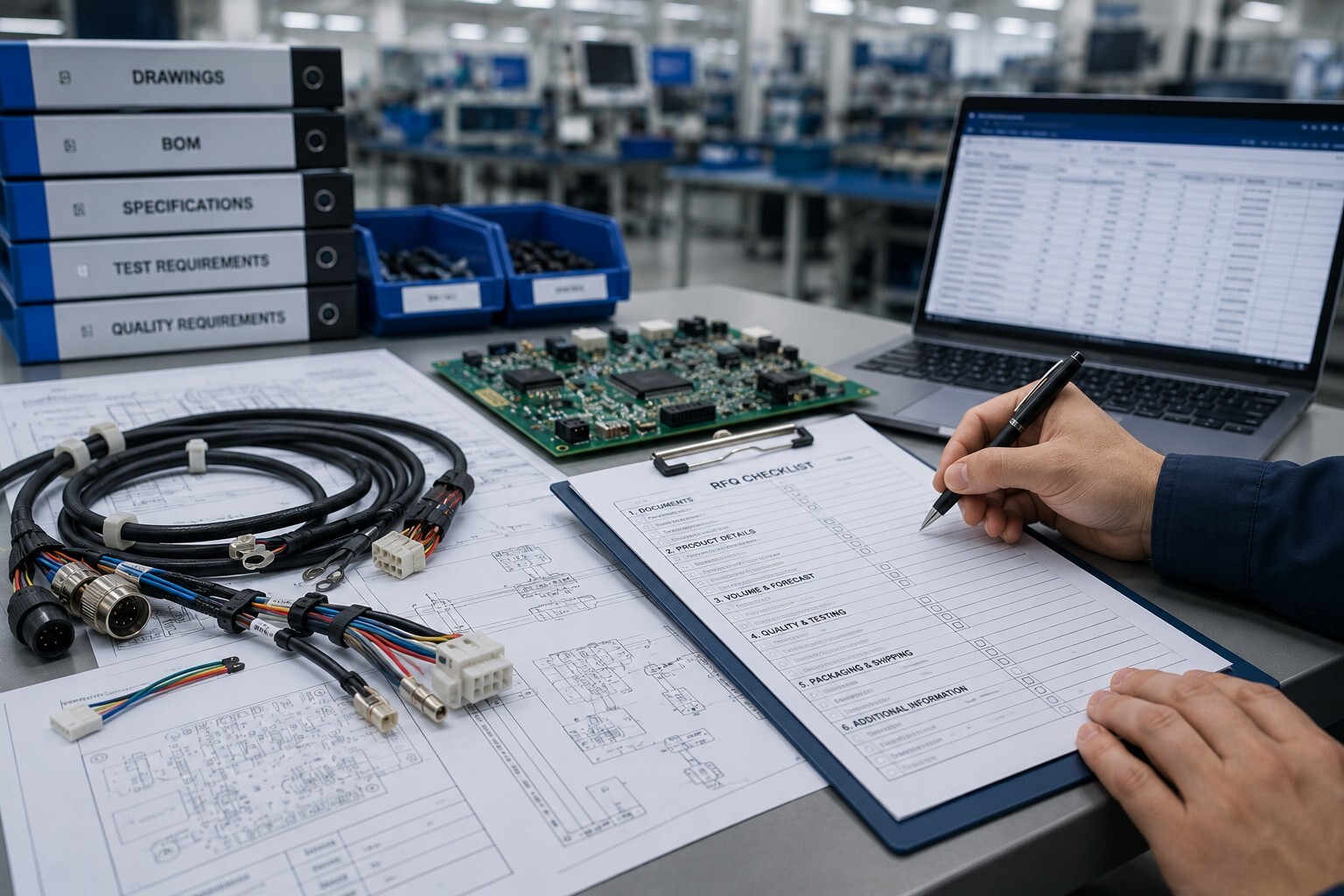
Why RFQ Quality Matters
An RFQ is more than a pricing request. It is the foundation for how a manufacturing partner evaluates materials, labor, tooling, production complexity, testing, quality requirements, and risk.
A well-prepared RFQ helps suppliers understand what needs to be built, what materials are required, what volumes are expected, what quality standards apply, and what risks could affect cost or lead time. It also helps OEMs compare suppliers more consistently because each quote is based on the same assumptions.
Start with Complete Drawings and Specifications
For cable assemblies, wire harnesses, and PCBAs, drawings and specifications are essential. They define what the supplier is being asked to build and help reduce interpretation errors.
For cable assemblies and wire harnesses, include details such as wire gauge, wire color, length, UL Type, connector part numbers, terminal requirements, shielding, sleeving, jacket materials, labeling, branch points, tolerances, and routing considerations.
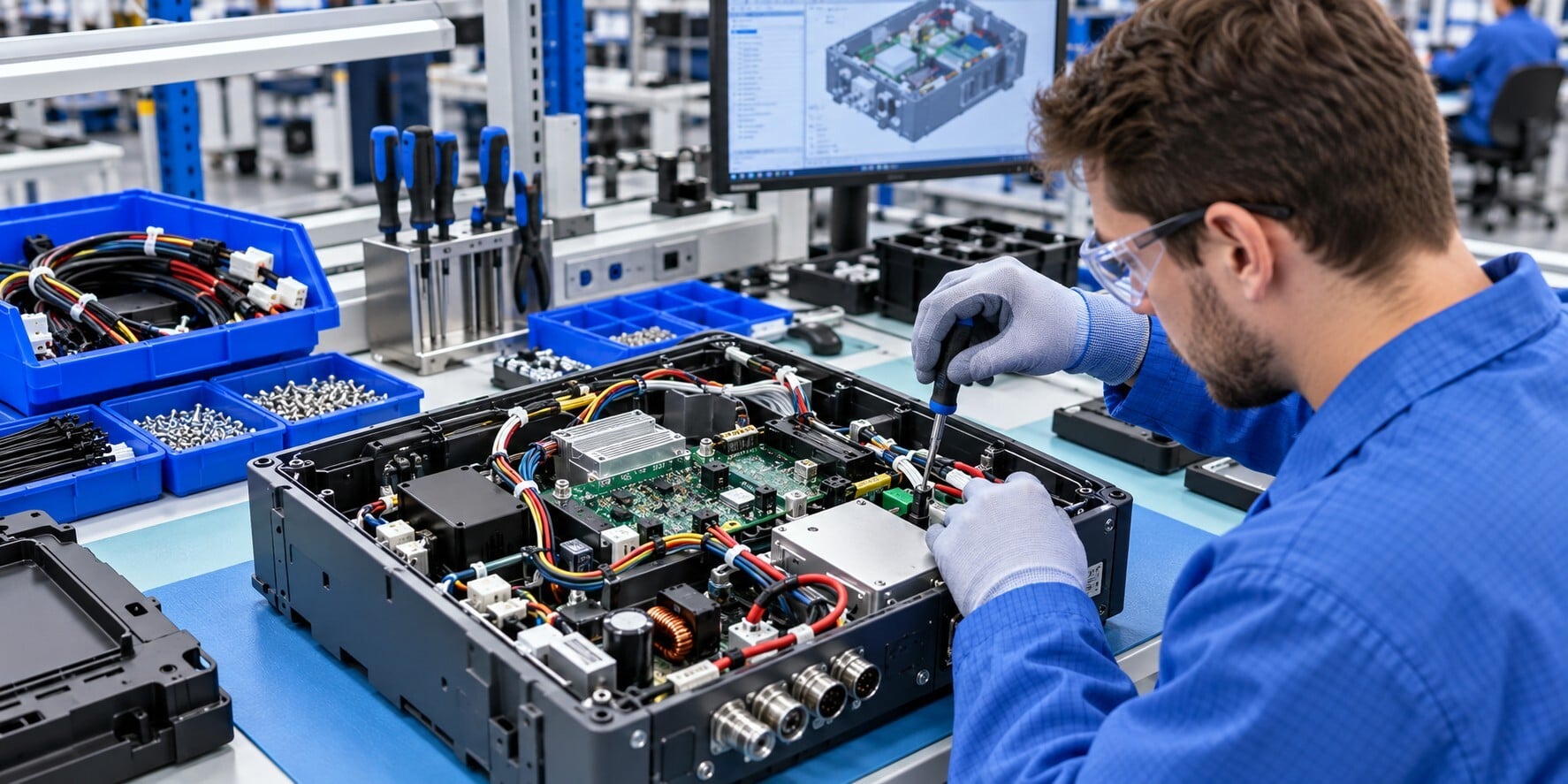
For PCBAs, include fabrication files, assembly drawings, BOMs, Gerber files, centroid or pick-and-place data, schematics when appropriate, test requirements, revision levels, and any special handling requirements.
If drawings are preliminary, label them clearly. If the RFQ is for a production transfer, provide the current approved revision and note whether any design updates are being considered.
Provide a Complete and Accurate BOM
The bill of materials is one of the most important RFQ inputs. Missing or unclear part numbers can slow down quoting and create sourcing uncertainty.
A useful BOM should include manufacturer part numbers, approved alternates, component descriptions, quantity per assembly, revision level, preferred suppliers, compliance requirements, and any customer-supplied items.
For PCBA programs, the BOM is especially important because component availability can affect pricing and lead time. Long-lead, obsolete, single-source, or allocation-sensitive components should be identified as early as possible.
For cable-specific sourcing considerations, Sanbor’s guide to custom cable assembly manufacturing outlines several design and sourcing details OEMs should evaluate before production.
Share Volume, Forecasts, and Program Expectations
Manufacturing pricing depends heavily on volume. A quote for 100 units will not be structured the same way as a quote for 10,000 units. Buyers should provide realistic annual volume, expected order quantities, launch timing, and forecast visibility.
Helpful details include initial production quantity, annual usage, expected order frequency, ramp-up timeline, quarterly forecast, and long-term program expectations.
If the program is still early, provide the best available estimate and explain what may change. This helps the supplier evaluate labor planning, material purchasing, tooling, capacity, and pricing tiers.
Define Testing and Inspection Requirements
Testing requirements should be included in the RFQ, not added after pricing is submitted. Testing can affect labor, fixtures, equipment, documentation, and lead time.
For cable assemblies and wire harnesses, testing may include continuity testing, hipot testing, pull testing, visual inspection, dimensional checks, or functional testing. Depending on the application, OEMs may also need to reference workmanship expectations such as IPC/WHMA-A-620 requirements for cable and wire harness assemblies.
For PCBAs, testing may include automated optical inspection, in-circuit testing, flying probe testing, functional testing, programming, burn-in, or customer-specific test procedures. Quality and inspection expectations may also be informed by standards such as IPC-A-610 acceptability standards for electronic assemblies.
If the OEM has existing test fixtures or procedures, note whether they will be provided. If testing requirements are not yet defined, explain the application and expected risk level so the supplier can recommend an appropriate approach.
A strong RFQ should also support early design for manufacturability review before production begins.
Include Quality, Compliance, and Documentation Needs
Quality requirements can significantly affect how a program is quoted and managed. Purchasing teams should include applicable standards, inspection requirements, documentation expectations, and traceability needs.
Depending on the application, this may include IPC or workmanship requirements, first article inspection, certificates of conformance, material certifications, lot traceability, serialization, production records, control plans, customer-specific quality requirements, and packaging instructions.
For regulated or quality-sensitive industries, these details should be clear before quoting. If documentation is required but not included in the RFQ, the supplier may not account for the labor and process controls needed to support it.
Explain the Application and Operating Environment
A supplier can provide better input when they understand how the assembly will be used. This does not mean the OEM needs to share sensitive product details, but basic application context is valuable.
For example, will the assembly be used in industrial equipment, transportation, communications hardware, medical technology, aerospace systems, or consumer products? Will it be exposed to vibration, heat, moisture, chemicals, flexing, EMI, or frequent handling?
This information helps the supplier identify whether materials, connectors, shielding, strain relief, testing, or packaging may need further review. If application requirements are still being refined, material selection topics such as cable assembly materials may need to be reviewed before final quoting.
Share Current Supplier or Production Challenges
If the RFQ is related to a supplier transfer, cost reduction project, quality issue, or production ramp, say so. This context helps the new supplier focus on the right risks.
Common reasons OEMs seek a new manufacturing partner include missed deliveries, rising costs, poor communication, quality drift, long lead times, capacity limitations, lack of documentation, supply chain risk, or the need for regional manufacturing options.
A good manufacturing partner can often help identify whether the issue is related to sourcing, design, documentation, testing, production process, or supplier fit.
Do Not Evaluate on Unit Price Alone
Yes, unit price obviously matters. But the lowest quoted unit price is not always the lowest total cost.
A stronger RFQ process should also evaluate supplier responsiveness, technical understanding, sourcing approach, quality systems, lead-time assumptions, testing capability, documentation support, communication, scalability, and the ability to support related assemblies.
For programs involving cable assemblies, wire harnesses, and PCBAs, supplier capability and process discipline can be just as important as price. That is one reason many OEMs evaluate the broader value of supplier consolidation, especially when multiple related assemblies need to work together in the final product.
Preparing an RFQ for Cable Assemblies, Wire Harnesses, or PCBAs?
Sanbor Manufacturing can review your drawings, BOM, production volume, testing needs, and sourcing goals to help identify the right manufacturing path. If your team is preparing to quote a new program, transfer production, or evaluate a new supplier, contact Sanbor Manufacturing to discuss your project requirements.
Final Takeaway
A better RFQ helps OEM purchasing and supply chain teams get better answers. When drawings, BOMs, volumes, testing requirements, documentation needs, and application details are clearly defined, suppliers can quote more accurately and identify potential risks earlier.
For OEMs sourcing cable assemblies, wire harnesses, or PCBAs, the RFQ process should be used to evaluate more than price. It should help determine whether a manufacturing partner can support quality, scalability, communication, and long-term production needs.
Sanbor Manufacturing supports OEMs with cable assembly, wire harness assembly, PCBA manufacturing, and related contract manufacturing services designed to simplify sourcing, reduce supply chain risk, and support scalable production.
FAQ: Manufacturing RFQs for Cable Assemblies, Wire Harnesses, and PCBAs
What should be included in a manufacturing RFQ?
A manufacturing RFQ should include drawings, specifications, BOMs, revision levels, annual volume, forecast expectations, target launch dates, testing requirements, quality standards, documentation needs, packaging instructions, and any known sourcing or supplier challenges. The more complete the RFQ, the easier it is for suppliers to provide accurate pricing and identify potential risks.
What should be included in a cable assembly RFQ?
A cable assembly RFQ should include wire or cable specifications, connector part numbers, cable lengths, shielding requirements, jacket materials, strain relief needs, labeling instructions, testing requirements, tolerances, expected volumes, and application details. OEMs should also note any environmental exposure, routing constraints, or compliance requirements.
What should be included in a wire harness RFQ?
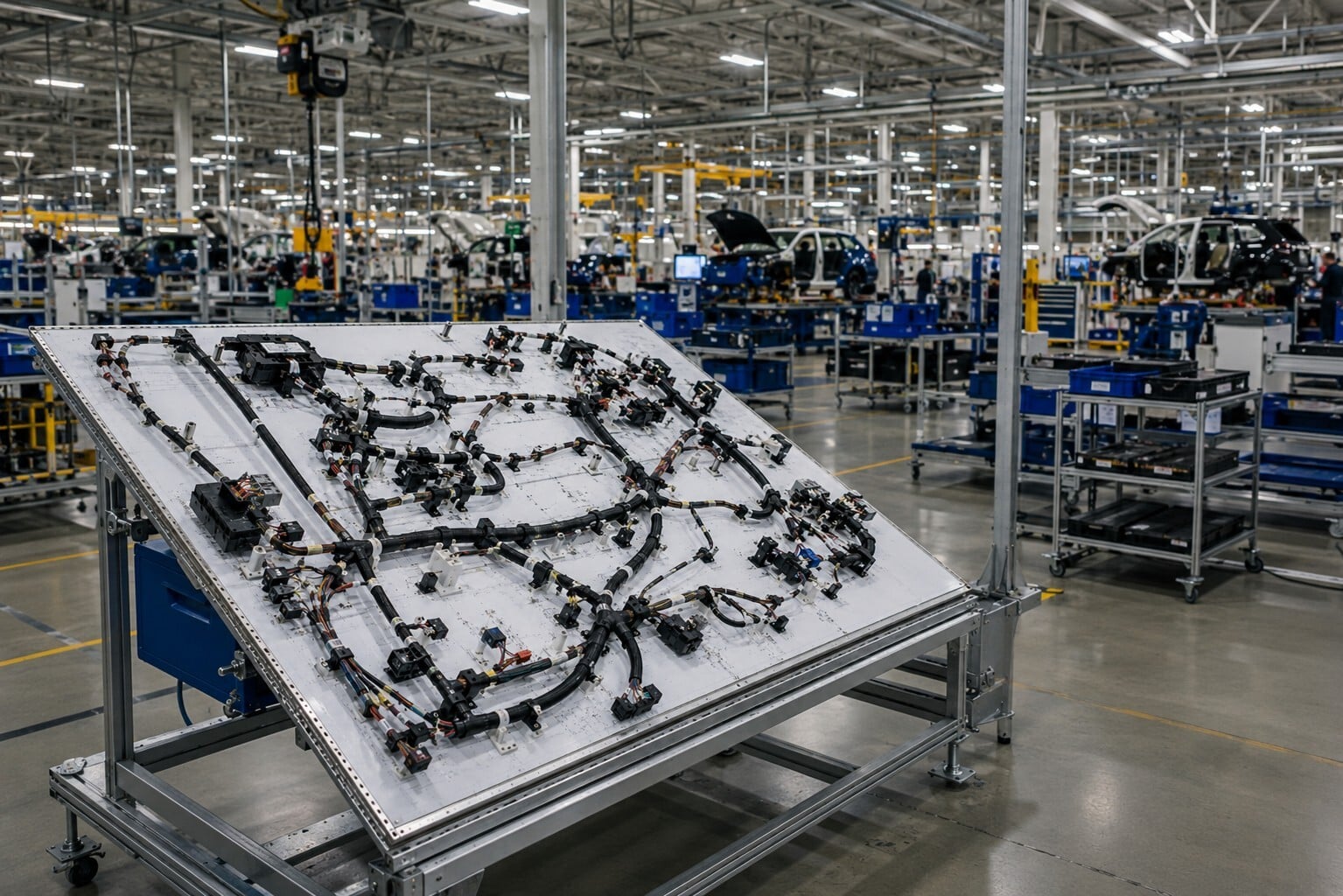
A wire harness RFQ should include harness drawings, wire gauges, wire colors, connectors, terminals, branch lengths, routing requirements, sleeves, clips, labels, test requirements, harness board needs, production volume, and documentation expectations. Clear routing and connection details help reduce quoting assumptions and manufacturing errors.
What should be included in a PCBA RFQ?
A PCBA RFQ should include Gerber files, BOM, assembly drawings, centroid or pick-and-place data, schematics when applicable, revision levels, test requirements, programming needs, inspection expectations, production volume, and any quality or compliance requirements. Component availability and approved alternates should also be identified when possible.
Why does annual volume matter in an RFQ?
Annual volume affects material purchasing, labor planning, tooling, pricing, capacity, and production strategy. A supplier may quote differently for prototypes, low-volume production, or higher-volume recurring builds. Providing realistic volume and forecast expectations helps suppliers create more accurate and useful quotes.
How can OEM buyers compare manufacturing quotes more effectively?
OEM buyers can compare quotes more effectively by making sure each supplier is quoting against the same drawings, BOM, revision level, volume, testing requirements, documentation needs, and packaging expectations. Buyers should also compare lead-time assumptions, quality support, sourcing strategy, communication, and scalability rather than focusing only on unit price.