Cable assemblies and wire harnesses are often discussed together. It makes sense, since both are used to organize, protect, and transmit electrical power, signals, or data within a larger system. But for OEMs, the difference matters. Choosing the wrong configuration can affect durability, routing, installation time, performance, cost, and long-term reliability.
For many products, the decision is not simply whether to use a cable assembly or a wire harness. The more important question is how the assembly will be used, what environment it will operate in, how it will be routed, and what level of protection, testing, and documentation the final application requires.
Sanbor Manufacturing supports OEMs with both cable assembly and wire harness assembly as part of its broader contract manufacturing services, including PCBA and related production support.
What You'll Learn
A cable assembly typically groups conductors into a protected, often more ruggedized cable structure designed to transmit power, data, or signals in a controlled format. A wire harness organizes multiple wires or cables into a routed assembly that connects components across a system. OEMs should evaluate environment, routing, durability, shielding, testing, and production volume before sourcing either solution.
What is a Cable Assembly?
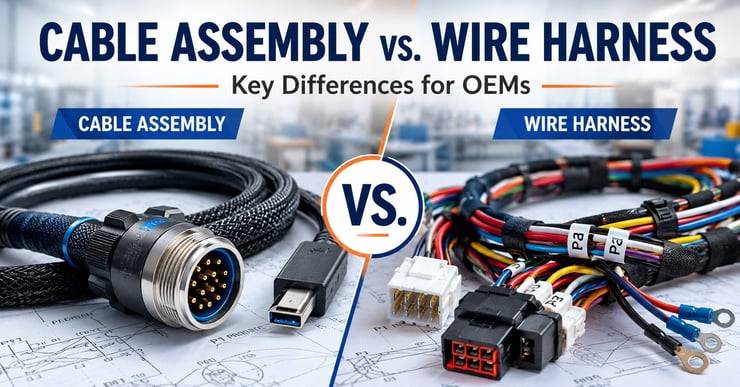
A cable assembly combines multiple wires or cables into a finished component designed to carry power, data, or signals between specific connection points. Depending on the application, it may include connectors, shielding, jacketing, overmolding, strain relief, labels, and other protective features.
OEMs often use cable assemblies when performance, durability, and consistency are critical. They can be designed for applications such as signal transmission, power distribution, data transfer, industrial automation, consumer electronics, medical devices, aerospace systems, transportation equipment, and communications hardware.
The defining feature of a cable assembly is its engineered construction. Rather than simply grouping conductors together, the assembly is built to meet specific electrical, mechanical, and environmental requirements. This may include EMI protection, abrasion resistance, moisture resistance, controlled flexibility, or precise connector-to-connector performance.
What is a Wire Harness?
A wire harness is a structured arrangement of wires, cables, connectors, terminals, sleeves, ties, labels, and protective coverings used to connect multiple components within a larger product or system.
OEMs use wire harnesses wire harnesses to simplify installation, reduce wiring errors, and create a repeatable electrical layout during production. Instead of routing individual wires separately, the harness organizes the connections into a defined configuration that matches the equipment’s design.
Wire harnesses are commonly used in vehicles, industrial machinery, aerospace equipment, control panels, appliances, medical equipment, communications hardware, electronic enclosures, and other systems with multiple electrical connection points.
The key distinction is that a wire harness is usually designed around the layout of the product. It must account for bends, branch points, mounting locations, connector orientation, vibration, heat, service access, and the physical path the wiring must follow through the assembly.
Cable Assembly vs. Wire Harness: The Practical Difference
The practical difference between a cable assembly and a wire harness comes down to how each component is designed to function inside the final product.
A cable assembly is often used when a specific connection requires a controlled cable structure, added protection, or defined electrical performance. It may be the better choice when the assembly is exposed to movement, abrasion, EMI, moisture, frequent handling, or other operating conditions that require a more robust construction.
A wire harness is typically used when multiple wires or cables need to be routed through a system in a consistent, organized way. It may include branches, breakouts, clips, sleeves, labels, and connectors that correspond to different components within the equipment.
In short, cable assemblies are often selected for point-to-point performance and protection. Wire harnesses are selected to manage multiple electrical pathways across a larger system.
When Should OEMs Use a Cable Assembly?
A cable assembly may be the better choice when the product requires:
- Durable protection against abrasion or handling
- EMI shielding
- Consistent data, signal, or power transmission
- A defined jacketed cable structure
- Connector-to-connector functionality
- Strain relief or overmolding
- Environmental protection
- Compact or controlled connection points
For example, an industrial device may use a shielded cable assembly to connect a sensor to a controller. A communications product may require cable assemblies that help maintain signal integrity. A medical or aerospace product may require cable assemblies built with specific documentation, traceability, and controlled manufacturing processes.
When Should OEMs Use a Wire Harness?
A wire harness may be the better choice when the product requires:
- Multiple wires routed through a system
- Branches or breakouts to different components
- Organized installation
- Repeatable routing during assembly
- Reduced wiring errors
- Improved serviceability
- Labeling and serialization
- Controlled connection points across a larger product
For example, an industrial machine may use a wire harness to connect motors, sensors, power modules, and control boards. A transportation application may use a harness to distribute power and signals across multiple subsystems while keeping installation consistent from unit to unit.
Not sure whether your project requires a cable assembly, wire harness, or integrated solution? Sanbor Manufacturing can review your requirements and help identify the right manufacturing path.
Why Sourcing Strategy Matters
For OEMs, cable assemblies and wire harnesses are functional components that affect product performance, reliability, assembly efficiency, and field service outcomes.
A qualified manufacturing partner should be able to review:
- Drawings and specifications
- Connector and terminal requirements
- Wire gauges and materials
- Shielding and jacket requirements
- Routing constraints
- Bend radius and strain relief
- Testing requirements
- Labeling and traceability needs
- Forecasts and production volume
- Compliance expectations
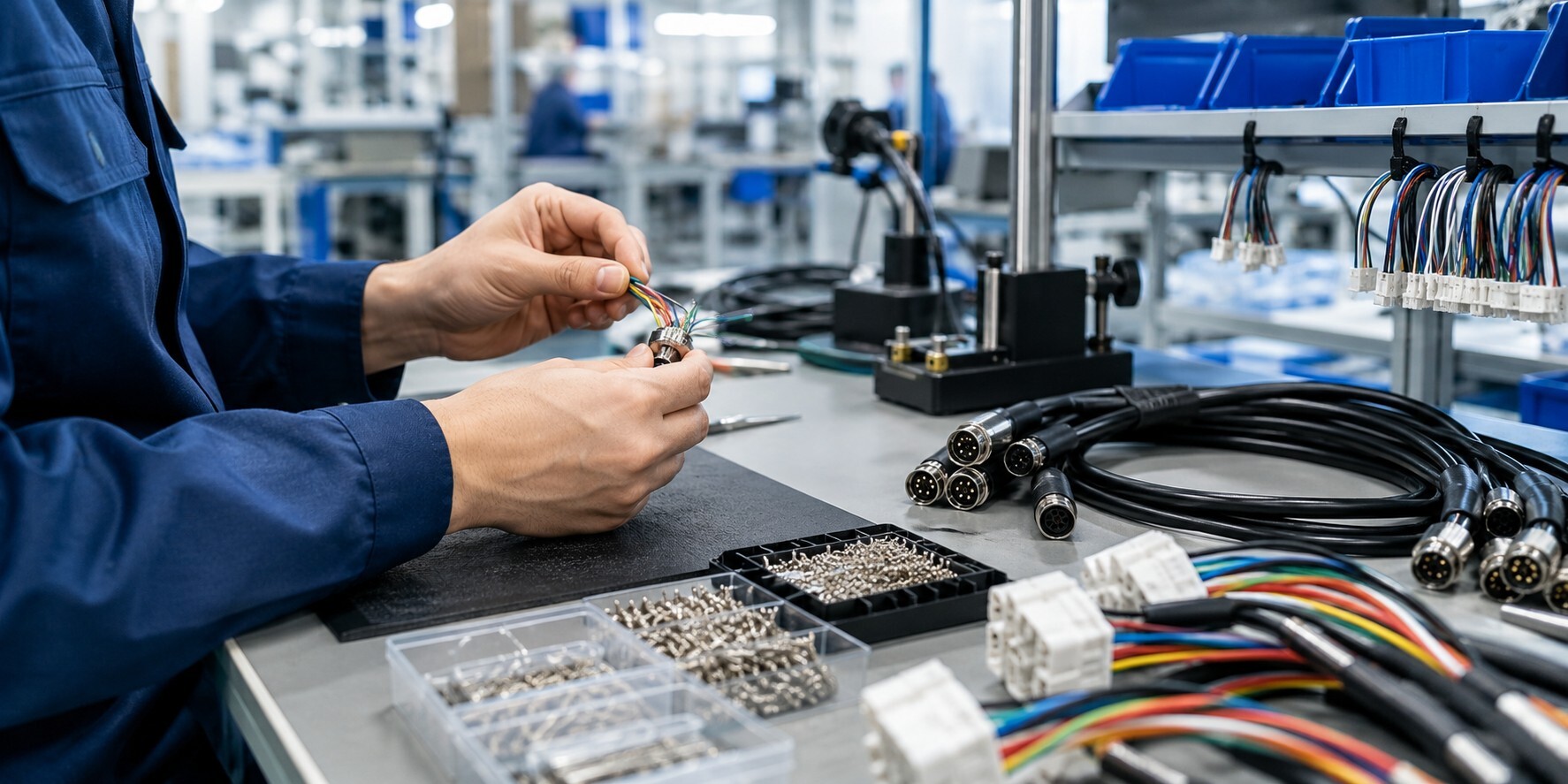
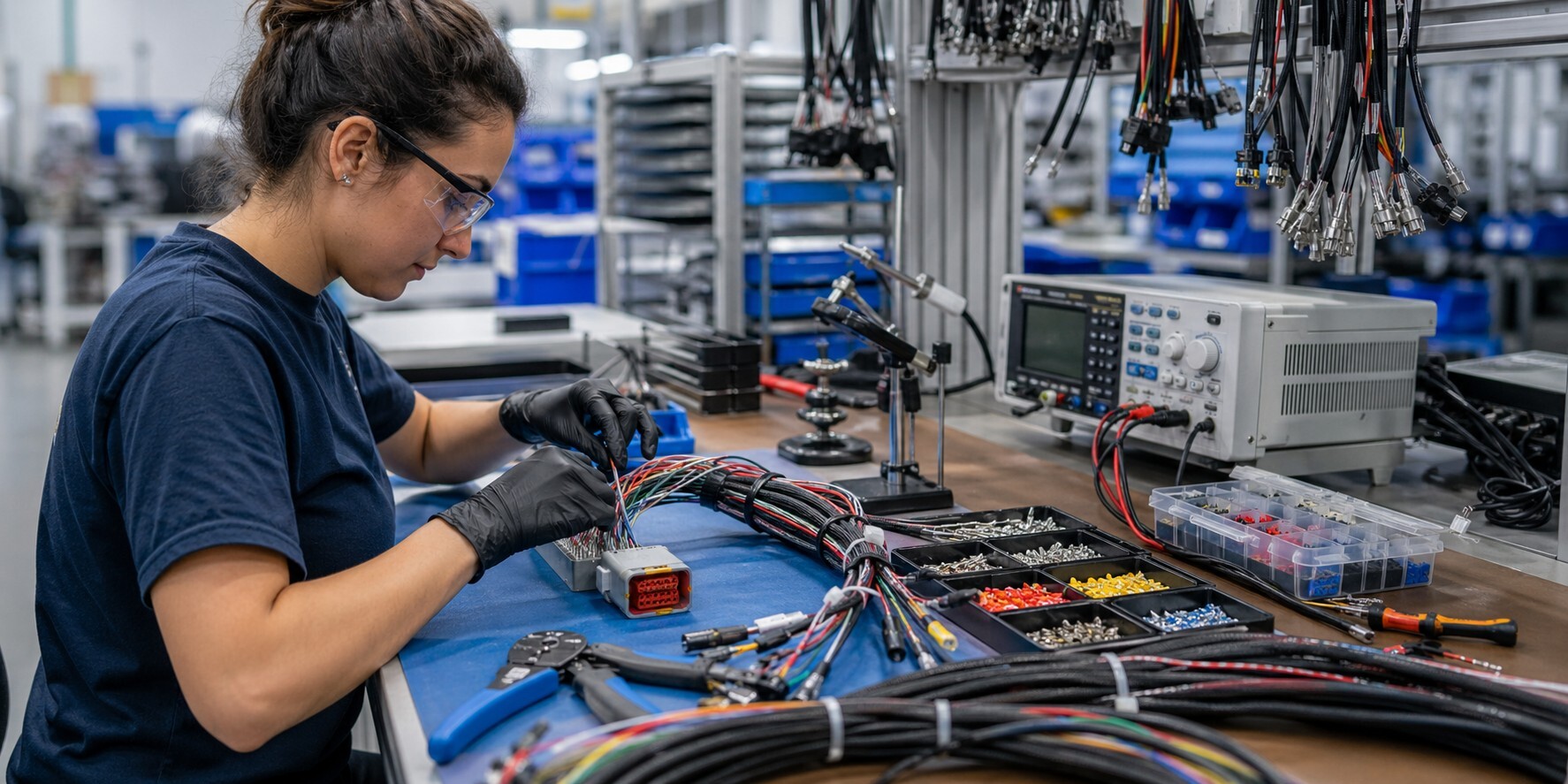
Cable and wire harness manufacturing can include wire cutting, stripping, crimping, connector application, ultrasonic welding or soldering, shielding, labeling, serialization, routing on custom harness boards, and documented processes aligned with IPC/WHMA-A-620 standards.
Choosing the Right Manufacturing Partner
The right partner should do more than build to print. For OEMs, the best value often comes from a manufacturer that can identify potential manufacturability issues before production begins.
That includes reviewing connector orientation, material availability, routing risks, tolerance issues, test requirements, assembly labor, and opportunities to reduce cost without compromising quality.
This is especially important when cable assemblies and wire harnesses are part of a larger electronic system involving PCBAs, enclosures, or final assemblies.
Final Takeaway
Cable assemblies and wire harnesses both play critical roles in OEM products, but they solve different design and manufacturing challenges.
For OEMs, the best sourcing decision starts with understanding the application, environment, performance needs, routing requirements, and production expectations.
Sanbor Manufacturing supports OEMs with cable assembly, wire harness assembly, PCBA manufacturing, and related contract manufacturing services designed to help simplify sourcing, improve quality, and support scalable production.
FAQ: Cable Assembly vs. Wire Harness Assembly
What is the difference between a cable assembly and a wire harness?
A cable assembly typically groups wires or cables into a protected unit designed to transmit power, data, or signals between components. A wire harness organizes multiple wires, cables, connectors, and terminals into a routed system that connects different parts of a product or equipment assembly. In general, cable assemblies are often used for protected transmission, while wire harnesses are used for organized electrical routing.
Is a cable assembly the same as a wire harness?
No. The terms are sometimes used interchangeably, but they are not exactly the same. A cable assembly is usually more enclosed or protected and may include jacketing, shielding, overmolding, or strain relief. A wire harness is typically designed to route and organize multiple wires or cables through a larger system, often with branches, labels, clips, sleeves, and connectors.
When should an OEM use a cable assembly?
An OEM should use a cable assembly when the application requires a protected, durable, and repeatable connection for power, signal, or data transmission. Cable assemblies are often used when shielding, environmental protection, strain relief, controlled routing, or connector-to-connector reliability is important.
When should an OEM use a wire harness?
An OEM should use a wire harness when multiple wires or cables need to be organized and routed through a product, machine, vehicle, enclosure, or electronic system. Wire harnesses are especially useful when the design requires multiple branches, clear labeling, defined connection points, easier installation, and repeatable assembly.
Are cable assemblies more durable than wire harnesses?
Cable assemblies can be more ruggedized than wire harnesses when they include protective jackets, shielding, overmolding, or strain relief. However, durability depends on the design, materials, operating environment, routing, and application requirements. A properly designed wire harness can also be highly reliable when built with the right materials, connectors, protection, and testing.
What information should OEMs include when requesting a quote for a cable assembly or wire harness?
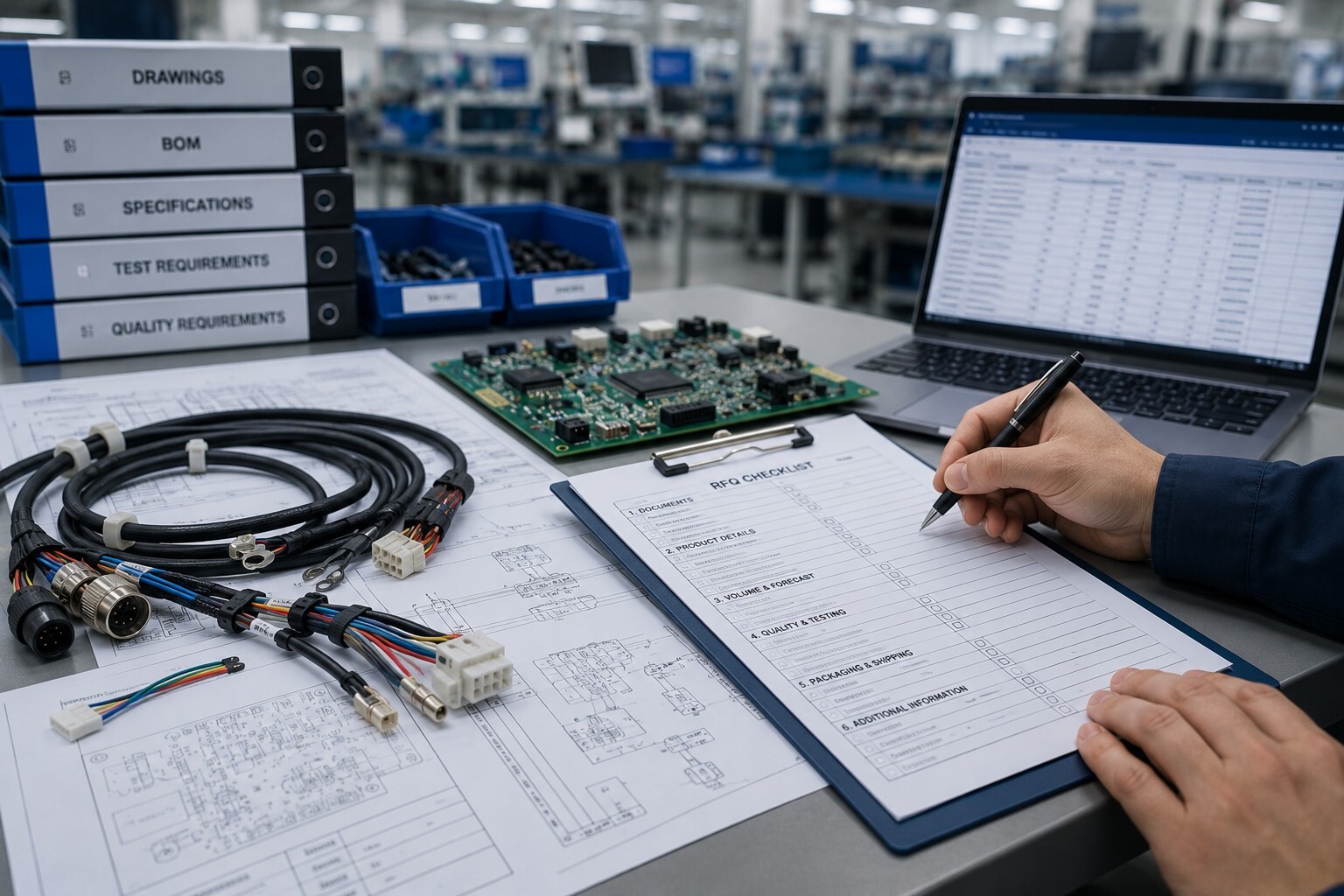
OEMs should include drawings, specifications, wire or cable requirements, connector part numbers, BOM details, target production volume, testing requirements, labeling needs, packaging requirements, compliance expectations, and any known environmental or routing constraints. The more complete the RFQ, the easier it is for the manufacturing partner to provide accurate pricing, identify risks, and recommend manufacturability improvements.
Can one manufacturer build both cable assemblies and wire harnesses?
Yes. Many OEMs benefit from working with a contract manufacturing partner that can support both cable assembly and wire harness assembly. This can reduce supplier complexity, improve communication, support consistent quality standards, and make it easier to manage related assemblies as part of a larger manufacturing program.