In aerospace manufacturing, wiring is not just another component. It is part of the critical infrastructure that keeps aircraft, defense systems, avionics, and mission-critical equipment operating safely and reliably.
For OEMs, aerospace wire harness assemblies must do more than connect power and signals. They must withstand vibration, temperature changes, moisture, electromagnetic interference, and demanding performance requirements, all while meeting strict quality and documentation expectations.
That is why choosing the right contract manufacturing partner is so important. A qualified manufacturing partner can help OEMs improve reliability, reduce production risk, and support more resilient supply chains for aerospace programs.
What You’ll Learn
In this article, we’ll explain what aerospace wire harness assemblies are, why they matter to OEMs, how they are manufactured, and what to look for in a contract manufacturing partner that can support quality, documentation, scalability, and supply chain reliability.
What are Aerospace Wire Harness Assemblies?
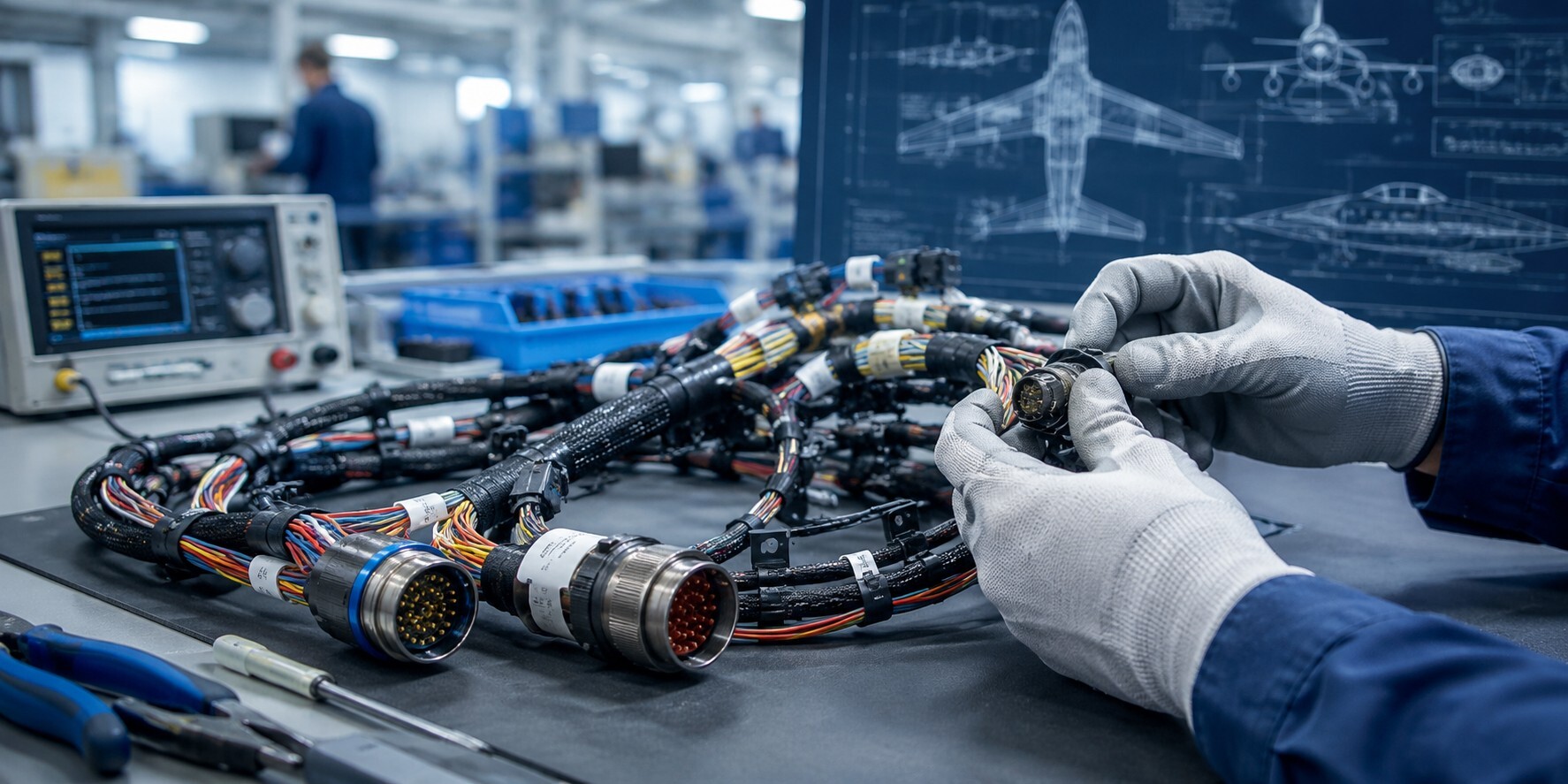
Aerospace wire harness assemblies are organized bundles of wires, cables, connectors, terminals, sleeves, shielding, and protective materials used to transmit electrical power and signals throughout aerospace systems.
These assemblies are often used in:
- Aircraft electrical systems
- Avionics
- Defense equipment
- Communication systems
- Navigation systems
- Cabin control systems
- Ground support and aerospace-related industrial equipment
Unlike standard wiring, aerospace wire harnesses are designed for demanding environments where failure can lead to costly downtime, safety concerns, or performance issues.
A well-built aerospace wire harness assembly must be durable, lightweight, precisely manufactured, and properly tested before it is integrated into the final system.
Why Aerospace Wire Harness Assemblies Matter to OEMs
OEMs depend on consistent, high-quality components to keep production moving and protect the performance of their finished products. In aerospace applications, wire harness assemblies play a direct role in system reliability.
A poorly manufactured harness can create issues such as signal loss, electrical failure, intermittent connectivity, unnecessary maintenance, and production delays.
For OEMs, high-quality aerospace wire harness assemblies can help:
- Reduce the risk of electrical failures
- Improve long-term product reliability
- Support safety and performance requirements
- Minimize maintenance and replacement costs
- Keep production schedules on track
- Strengthen supply chain confidence
In aerospace manufacturing, consistency matters. The right partner should not only produce assemblies to specification but also provide the process control, documentation, testing, and quality discipline OEMs need.
Key Requirements for Aerospace Wire Harness Manufacturing
Aerospace wire harness manufacturing requires more than basic assembly capabilities. OEMs should look for a partner with the experience and systems needed to support complex, high-reliability production.
Key requirements often include:
Precision Manufacturing
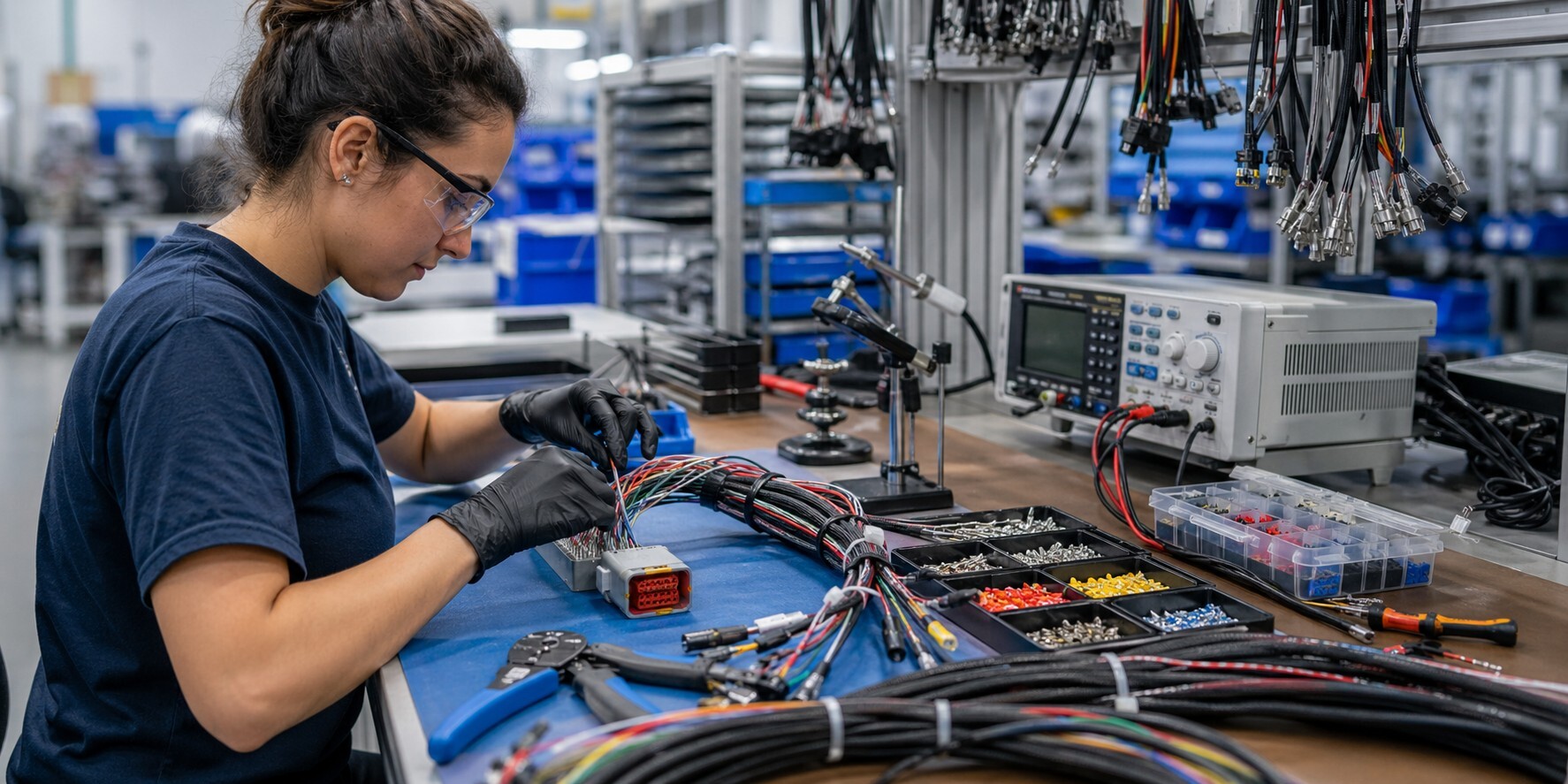
Aerospace wire harnesses must be built to exact specifications. Wire lengths, routing, stripping, crimping, soldering, labeling, bundling, and connector placement all need to be controlled with precision.
Even small variations can impact installation, performance, or long-term durability.
Durable Materials
Aerospace applications often require materials that can withstand harsh operating conditions. This may include high-temperature wire, abrasion-resistant insulation, protective sleeving, shielding, and durable connectors.
Material selection should align with the application, performance requirements, and operating environment.
Lightweight Design
Weight is a critical factor in aerospace applications. Harnesses must be designed and manufactured to reduce unnecessary bulk while maintaining strength, reliability, and protection.
A capable manufacturing partner can help OEMs balance durability, performance, and weight considerations.
Quality Standards and Documentation
Aerospace OEMs often require manufacturing partners to work within strict quality systems and workmanship standards. Depending on the application, this may include expectations related to AS9100, ISO 9001, IPC/WHMA-A-620 workmanship, traceability, inspection records, and documented testing.
For OEMs, documentation is not just paperwork. It is part of the quality record that supports compliance, repeatability, and long-term program confidence.
Testing and Validation
Each assembly should be tested to confirm it meets electrical and mechanical requirements. Testing may include continuity testing, pull testing, visual inspection, dimensional checks, and other application-specific validation steps.
Thorough testing helps identify issues before assemblies enter final production or field use.
How Aerospace Wire Harness Assemblies are Made
The aerospace wire harness manufacturing process requires careful coordination between engineering, sourcing, production, and quality teams.
A typical process includes:
1. Design and Engineering Review
The process begins with a review of drawings, specifications, bills of materials, and application requirements. This step helps confirm manufacturability, material needs, tolerance requirements, testing expectations, and documentation requirements.
2. Material Selection and Sourcing
The right wires, cables, connectors, terminals, labels, sleeves, and protective materials are selected based on the application. Supplier qualification and material consistency are important for maintaining product reliability.
3. Wire Cutting and Stripping
Wires are cut to precise lengths and stripped according to the assembly requirements. Accuracy at this stage helps ensure proper fit, routing, and termination.
4. Crimping, Soldering, and Termination
Terminals and connectors are attached using controlled processes and specialized tools. Proper crimping and termination are critical to electrical performance and long-term durability.
5. Harness Assembly and Routing
Wires are bundled, routed, labeled, and secured using sleeves, clamps, ties, or protective coverings. The harness must match the required configuration and be easy to install into the final system.
6. Inspection and Testing
Assemblies are inspected and tested to verify performance, quality, and conformance to specifications. This step helps reduce defects, rework, and downstream production issues.
What OEMs Should Look for in an Aerospace Wire Harness Partner
Choosing the right manufacturing partner can have a direct impact on quality, lead times, cost control, and supply chain stability.
OEMs should evaluate potential partners based on several key factors.
Proven Manufacturing Experience
Aerospace wire harness assemblies require discipline, repeatability, and attention to detail. OEMs should look for a partner with experience supporting complex wire harness and cable assembly programs.
Strong Quality Systems
A qualified partner should have clear quality processes, inspection procedures, testing protocols, and documentation controls. Quality should be built into every stage of production, not treated as a final checkpoint.
Custom Assembly Capabilities
Aerospace applications often require custom wire harness solutions. The right partner should be able to support application-specific requirements, including unique routing, connectors, shielding, labeling, and environmental protection.
Scalable Production Capacity
OEMs need partners who can support production growth without sacrificing quality or consistency. Scalability is especially important for programs that move from initial builds to ongoing production.
Supply Chain Flexibility
Aerospace OEMs cannot afford unnecessary delays caused by supplier instability, material shortages, or limited production options. A partner with global manufacturing flexibility can help reduce risk and keep programs moving.
Need a more reliable wire harness manufacturing partner?
Sanbor Manufacturing helps OEMs improve cost control, production flexibility, and supply chain stability through custom cable assembly, wire harness assembly, PCBA, and box build solutions. Contact us to discuss your next program.
How Sanbor Manufacturing Supports OEM Aerospace Programs
Sanbor Manufacturing helps OEMs improve supply chain stability, cost efficiency, and production confidence through contract manufacturing solutions for cable assemblies, wire harness assemblies, printed circuit board assemblies, box builds, and plastic injection molding.
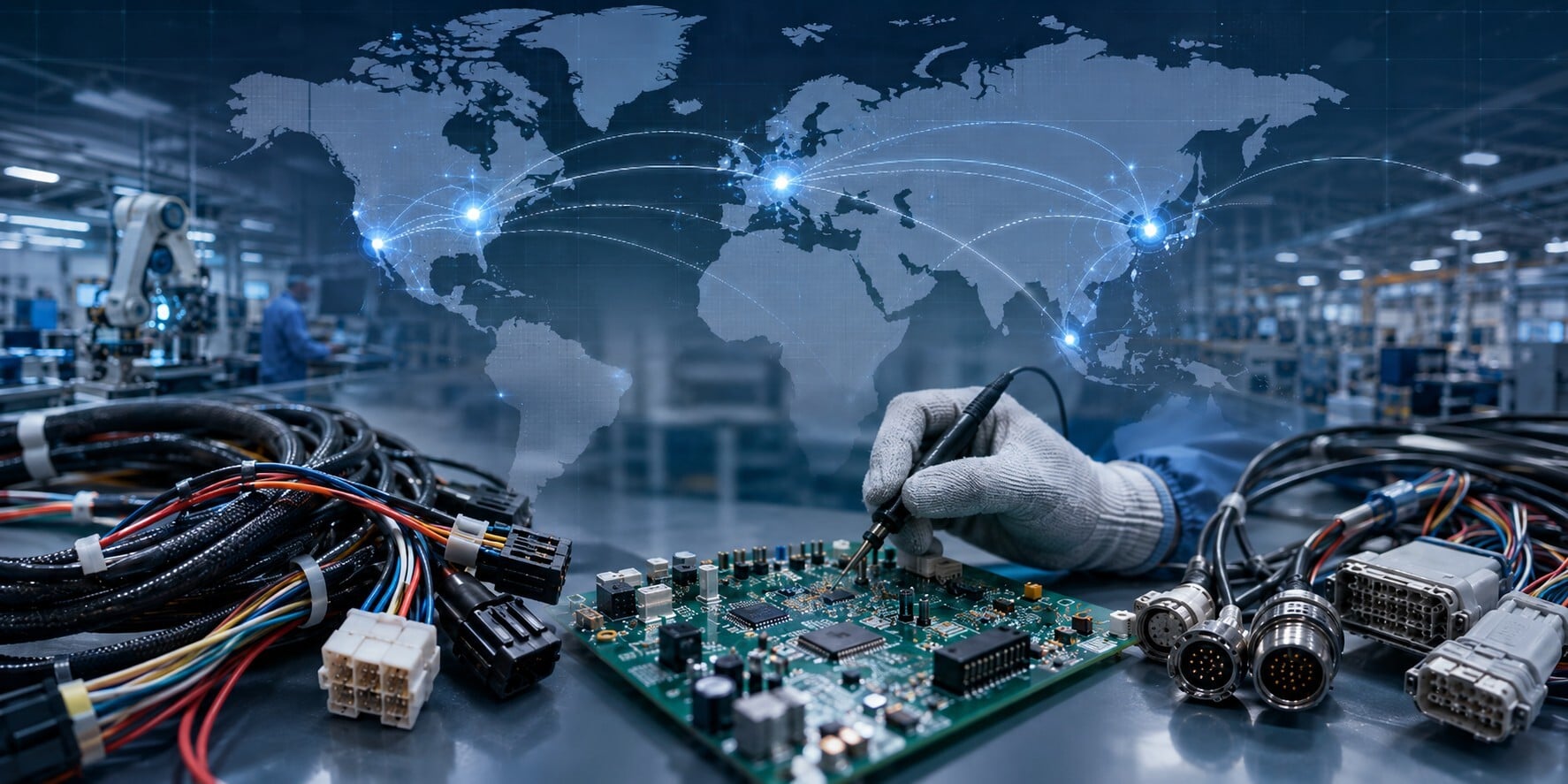
With a global manufacturing footprint across the U.S., Asia, and Europe, Sanbor gives OEMs more flexibility when planning production, managing costs, and reducing supply chain risk.
For aerospace and other demanding industries, Sanbor Manufacturing supports OEMs with:
- Custom cable and wire harness assembly
- Printed circuit board assembly
- Box build integration
- Plastic injection molding
- Global production flexibility
- Cost-efficient manufacturing solutions
- Quality-focused production processes
- Support for scalable OEM programs
Whether an OEM needs to consolidate suppliers, improve production efficiency, or reduce sourcing risk, Sanbor provides the manufacturing capabilities and global reach needed to support long-term program success.
Future Trends in Aerospace Wire Harness Assemblies
As aerospace systems become more advanced, wire harness assemblies will continue to evolve. OEMs should prepare for increased demand around lighter materials, compact designs, improved shielding, enhanced diagnostics, and more efficient production methods.
Key trends include:
- Smaller and lighter harness designs
- Advanced insulation and protective materials
- Increased use of shielding for signal integrity
- Smart wiring and sensor integration
- Automation in assembly and testing
- Greater focus on supply chain diversification
To stay competitive, OEMs need manufacturing partners who can adapt to changing requirements while maintaining quality, consistency, and cost control.
Building a Better Aerospace Wire Harness Supply Chain
Aerospace wire harness assemblies are too important to treat as basic sourced components. They directly impact product reliability, installation efficiency, safety, and long-term performance.
For OEMs, the right manufacturing partner can help reduce risk, improve consistency, and support a more resilient supply chain. That means looking beyond price alone and evaluating the full value of quality systems, production flexibility, documentation, testing, and scalability.
Sanbor Manufacturing works with OEMs to deliver reliable cable, wire harness, PCBA, and box build solutions that support complex manufacturing needs across demanding industries.
Looking for a contract manufacturing partner that can support your wire harness and cable assembly needs?
Contact Sanbor Manufacturing to discuss your production goals and supply chain requirements.
Frequently Asked Questions
What are aerospace wire harness assemblies?
Aerospace wire harness assemblies are organized bundles of wires, cables, connectors, terminals, and protective materials used to transmit power and signals throughout aircraft, defense systems, avionics, and other aerospace equipment.
Why are aerospace wire harness assemblies important?
They are important because they help ensure reliable electrical performance in demanding aerospace environments. Poorly manufactured wire harnesses can lead to signal issues, electrical failures, downtime, and higher maintenance costs.
What should OEMs look for in an aerospace wire harness manufacturer?
OEMs should look for experience, quality systems, testing capabilities, documentation controls, custom assembly expertise, scalable production capacity, and supply chain flexibility.
What standards are commonly associated with aerospace wire harness manufacturing?
Aerospace wire harness manufacturing may involve quality and workmanship expectations related to AS9100, ISO 9001, IPC/WHMA-A-620, traceability, inspection records, and documented testing requirements.
How can contract manufacturing help aerospace OEMs?
Contract manufacturing can help aerospace OEMs improve production efficiency, reduce supply chain risk, manage costs, access specialized manufacturing capabilities, and scale production more effectively.