Cable assemblies are often treated as simple components, but they play a critical role in how electrical and electronic systems perform. For OEMs, a cable assembly is not just a bundle of wires. It is a functional part of the product that affects reliability, installation, serviceability, safety, and long-term performance.
Whether the assembly is used in industrial equipment, transportation systems, consumer electronics, medical devices, or communications products, the details matter. Wire selection, connector compatibility, shielding, strain relief, labeling, testing, and production consistency can all influence how well the finished product performs in the field.
This guide explains the fundamentals of cable assemblies, what OEMs should consider when specifying them, and how a strong manufacturing process can help reduce risk before products reach full production.
What You’ll Learn
Cable assemblies play a critical role in how OEM products transmit power, data, and signals. In this guide, you’ll learn what cable assemblies are, how they are used in manufacturing, which components affect performance, and what OEMs should define before sourcing a custom cable assembly.
You’ll also learn how cable assembly design, material selection, testing, quality control, and manufacturability can impact product reliability, production efficiency, and long-term cost.
What is a Cable Assembly?
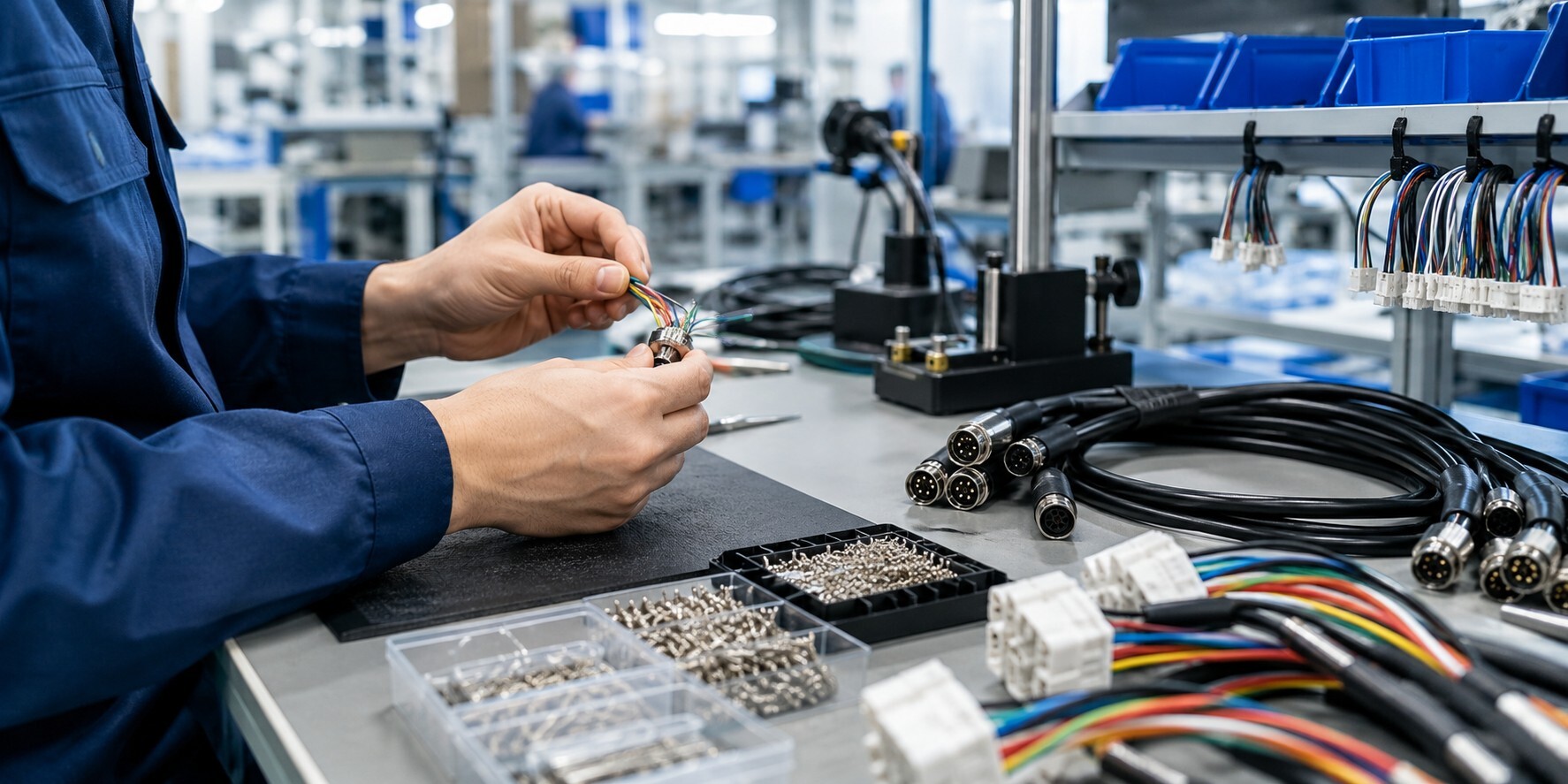
A cable assembly is a group of wires or cables that are cut, terminated, organized, and protected to transmit power, data, or signals within a product or system.
Cable assemblies can be simple or highly complex depending on the application. Some may include only a few conductors and connectors, while others may include shielding, overmolding, labels, protective sleeving, strain relief, and multiple branch points.
In OEM manufacturing, cable assemblies are commonly used to connect:
- Power supplies
- Sensors
- Printed circuit boards
- Displays and interfaces
- Motors and actuators
- Control panels
- Communication modules
- Internal subassemblies
A well-designed cable assembly supports the electrical, mechanical, and environmental needs of the final product.
Why Cable Assemblies Matter in OEM Products
Cable assemblies directly affect how products function, how easy they are to assemble, and how reliably they perform after installation.
A poorly specified or poorly manufactured cable assembly can lead to:
- Intermittent electrical failures
- Signal loss or interference
- Connector mismatch
- Installation delays
- Excessive field service issues
- Premature wear
- Product downtime
- Warranty claims
For OEMs, these issues can become expensive quickly. A cable assembly failure may not only affect one component. It can interrupt the performance of the entire system.
That is why cable assemblies should be evaluated as engineered components, not commodity parts.
Key Components of a Cable Assembly
Conductors
Conductors carry power, data, or signals. The conductor material, gauge, strand count, and flexibility must match the electrical and mechanical requirements of the application.
Insulation
Insulation surrounds the conductor and helps prevent electrical shorts, current leakage, and damage from surrounding components or environmental conditions.
Shielding
Shielding helps protect signals from electromagnetic interference. This is especially important in applications involving sensitive electronics, communications, motors, sensors, or control systems.
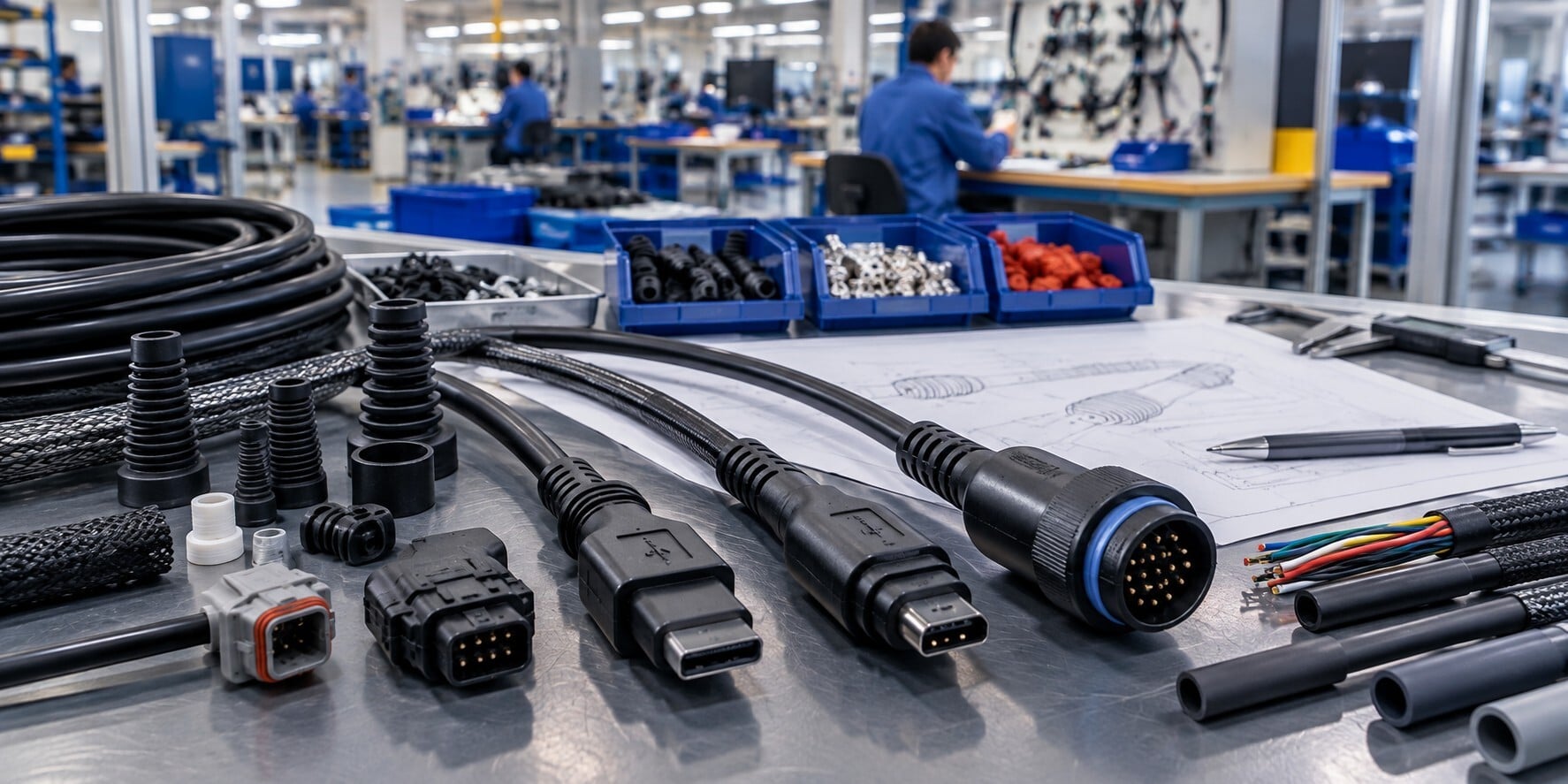
Connectors and Terminals
Connectors and terminals create the interface between the cable assembly and the larger system. The wrong connector can create fit, performance, or durability problems.
Jackets, Sleeving, and Protective Coverings
Outer jackets, heat shrink, braided sleeving, conduit, and other protective materials help guard the assembly against abrasion, moisture, chemicals, heat, and mechanical stress.
Labels and Identification
Labeling supports installation, troubleshooting, quality control, and service. For complex assemblies, clear identification can reduce assembly errors and maintenance time.
Common Types of Cable Assemblies
Power Cable Assemblies
Power cable assemblies are designed to carry electrical power safely and reliably. They must be sized correctly for voltage, current, heat, and safety requirements.
Signal Cable Assemblies
Signal cable assemblies transmit electrical signals between components. They may require shielding, grounding, or specific routing to protect signal integrity.
Data Cable Assemblies
Data cable assemblies support communication between electronic systems. These may include Ethernet, USB, coaxial, ribbon cable, or other application-specific formats.
Coaxial Cable Assemblies
Coaxial cable assemblies are used for high-frequency signal transmission in communications, networking, RF systems, and other signal-sensitive applications.
Ribbon Cable Assemblies
Ribbon cable assemblies are flat, flexible cables often used inside electronic devices where space efficiency and organized connections are important.
Custom Cable Assemblies
Custom cable assemblies are built to match the exact electrical, mechanical, environmental, and installation requirements of the OEM application.
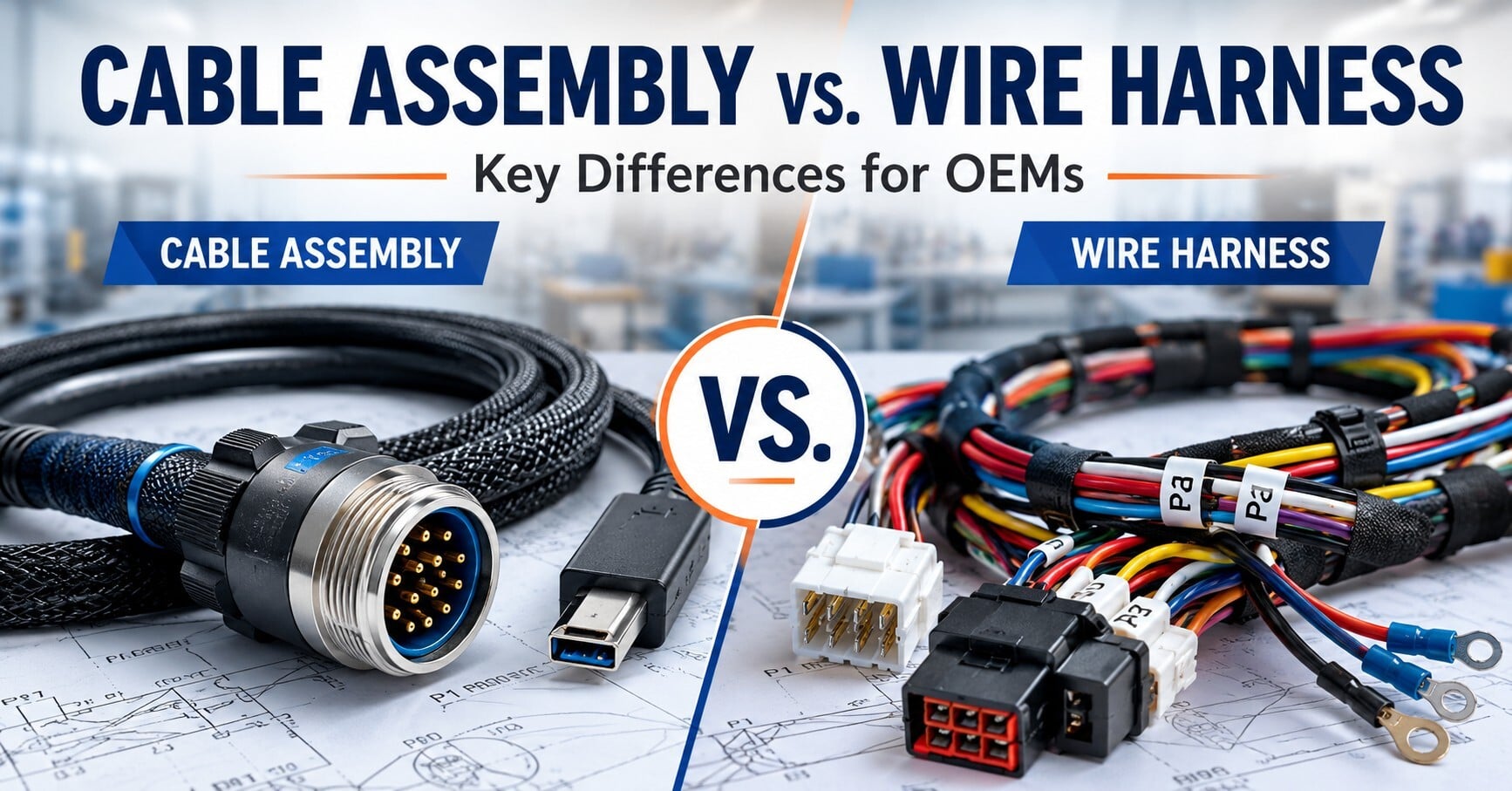
Cable Assembly vs. Wire Harness: What's the Difference?
Cable assemblies and wire harnesses are closely related, but they are not always the same.
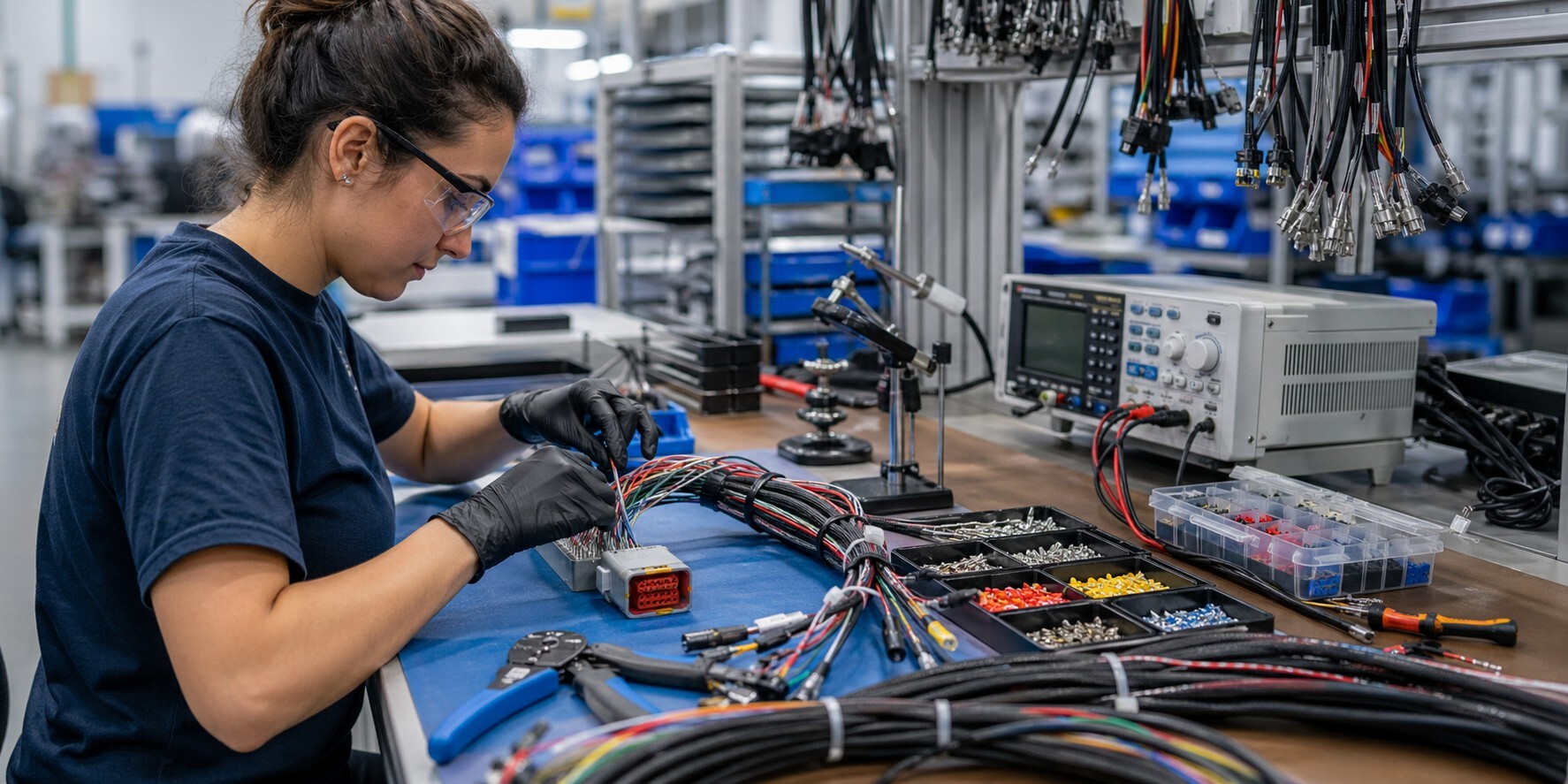
A cable assembly usually refers to one or more cables that are terminated with connectors and protected for a specific electrical or signal function. A wire harness typically organizes multiple wires into a structured bundle that simplifies routing, installation, and system integration.
In practice, the terms can overlap depending on the industry and application. The most important point for OEMs is to clearly define the function, environment, routing, connection points, and testing requirements of the assembly.
What OEMs Should Define Before Requesting a Cable Assembly Quote
Clear specifications help prevent delays, rework, and cost surprises. Before requesting a quote, OEMs should define as much of the following information as possible:
- Application and product environment
- Voltage and current requirements
- Signal or data transmission needs
- Cable length and tolerances
- Connector types
- Terminal requirements
- Wire gauge and conductor material
- Insulation and jacket material
- Shielding requirements
- Bend radius and flexibility requirements
- Strain relief needs
- Labeling or color-coding requirements
- Testing requirements
- Packaging requirements
- Annual volume and forecasted demand
- Any industry or customer-specific standards
This information helps the manufacturer recommend the right materials, tooling, assembly methods, and testing process.
Design and Manufacturability Considerations
A cable assembly may meet the functional requirement but still be difficult or inefficient to manufacture. This can affect production cost, consistency, and lead time.
OEMs should consider:
Connector Orientation
Connector orientation should support efficient installation and reduce the risk of incorrect assembly.
Bend Radius
The cable should not be forced into tight bends that can damage conductors, shielding, or insulation.
Strain Relief
Strain relief helps protect the termination points from pulling, bending, vibration, or movement.
Routing and Space Constraints
The assembly should be designed to fit cleanly within the product without interference, abrasion, or pinch points.
Material Availability
Hard-to-source materials or connectors can increase lead times and create supply chain risk.
Testing Access
The assembly should be designed so it can be inspected and tested efficiently before shipment.
A strong design-for-manufacturing review can help identify these issues before production begins.
Cable Assembly Testing and Quality Control
Testing is critical because many cable assembly defects are not visible from the outside.
Common cable assembly quality checks include:
- Continuity testing
- Short circuit testing
- Hi-pot testing when required
- Pull-force testing
- Crimp height inspection
- Connector inspection
- Pinout verification
- Visual inspection
- Dimensional inspection
- Label verification
- Functional testing when required
For OEMs, quality control should not only confirm that an assembly works. It should confirm that the assembly can be manufactured consistently across production runs.
Common Cable Assembly Mistakes to Avoid
OEMs can reduce cost, lead time, and quality issues by avoiding several common mistakes.
Treating Cable Assemblies as Commodity Parts
Cable assemblies are functional components that affect product reliability. Price matters, but the lowest-cost option may create higher costs later if quality or consistency suffers.
Providing Incomplete Specifications
Missing details can lead to incorrect quotes, material substitutions, production delays, or assemblies that do not fully meet application needs.
Overlooking Environmental Conditions
Temperature, moisture, chemicals, vibration, UV exposure, and abrasion can all affect cable assembly performance.
Ignoring Installation Requirements
If the assembly is difficult to route, connect, label, or service, it can slow production and create field issues.
Waiting Too Long to Involve Manufacturing
Early manufacturing input can help identify design improvements, sourcing risks, and cost-saving opportunities before the assembly reaches production.
Need help moving from cable assembly requirements to reliable production?
Sanbor Manufacturing supports OEMs with custom cable assemblies, wire harnesses, PCB assembly, box build integration, and global manufacturing flexibility across the U.S., Asia, and Europe. Talk to Sanbor Manufacturing about your next program.
How Sanbor Manufacturing Supports Cable Assembly Programs
Sanbor Manufacturing supports OEMs with custom cable assembly and wire harness manufacturing services designed for production reliability, cost efficiency, and supply chain flexibility.
Our team works with customers to support:
- Custom cable assemblies
- Wire harness assemblies
- Printed circuit board assembly
- Box build integration
- Plastic injection molding
- Material sourcing support
- Quality inspection and testing
- Production scaling
- Global manufacturing flexibility across the U.S., Asia, and Europe
For OEMs managing complex products, Sanbor can help reduce supplier complexity by supporting multiple manufacturing needs through one partner.
Build Better Cable Assembly Programs with Sanbor Manufacturing
Cable assemblies are critical to product performance, installation efficiency, and long-term reliability. By understanding the basics, defining requirements clearly, and working with an experienced manufacturing partner, OEMs can reduce risk before production begins.
Sanbor Manufacturing helps OEMs produce cable assemblies and wire harnesses with the quality, flexibility, and production support needed to keep programs moving. Let's start a conversation.
Frequently Asked Questions
What is included in a cable assembly?
A cable assembly may include conductors, insulation, connectors, terminals, shielding, jackets, sleeving, strain relief, labels, and protective coverings.
What industries use cable assemblies?
Cable assemblies are used in industrial equipment, transportation, automotive systems, medical devices, consumer electronics, communications equipment, aerospace applications, and other OEM products.
What information is needed to quote a custom cable assembly?
OEMs should provide electrical requirements, cable length, connector types, wire gauge, environmental conditions, shielding needs, labeling requirements, testing expectations, and projected production volume.
Why are custom cable assemblies important for OEMs?
Custom cable assemblies help OEMs meet specific performance, installation, environmental, and reliability requirements that standard off-the-shelf cables may not satisfy.
How are cable assemblies tested?
Cable assemblies may be tested through continuity testing, short circuit testing, hi-pot testing, pull-force testing, crimp inspection, pinout verification, dimensional inspection, and functional testing when required.