Cable assemblies are often exposed to movement, handling, vibration, tight routing, and demanding operating environments. For OEMs, the point where a cable meets a connector, housing, or termination area is one of the most important areas to protect.
That is where cable overmolding and strain relief become important.
Both design features help improve durability, reduce mechanical stress, and support long-term cable assembly reliability. When specified correctly, they can help OEMs reduce field failures, improve product performance, and create a more repeatable manufacturing process.
Sanbor Manufacturing supports OEMs with cable assembly, wire harness assembly, PCBA manufacturing, and related contract manufacturing services designed to simplify sourcing and support scalable production.
What You'll Learn
In this article, we’ll cover:
- What cable overmolding and strain relief do in a cable assembly
- Why connector and termination points are common failure areas
- How overmolding can improve durability, sealing, and handling
- What OEMs should consider when selecting strain relief methods
- Why early supplier input helps improve cable assembly manufacturability
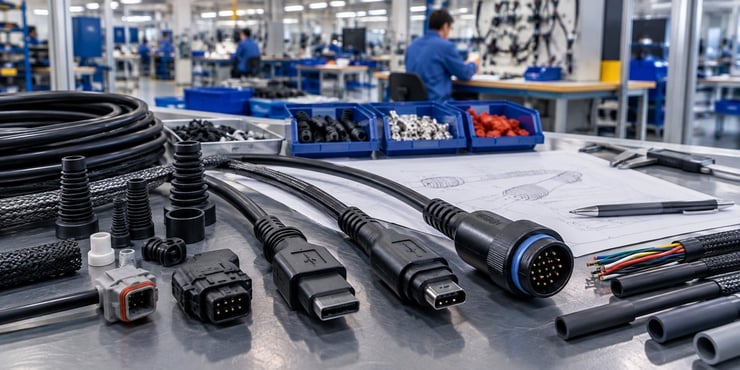
Cable overmolding and strain relief help protect vulnerable connection points in cable assemblies by reducing stress from pulling, bending, twisting, vibration, and repeated handling. For OEMs, these design features can improve durability, reduce field failures, and support more reliable production.
What is Cable Overmolding?
Cable overmolding is the process of molding material over a cable, connector, or termination area to create a sealed, durable, and integrated finished assembly. The overmold becomes part of the cable assembly and can provide added protection, improved handling, strain relief, and environmental resistance.
Overmolding is commonly used when a cable assembly needs to withstand repeated use, frequent connection and disconnection, exposure to moisture or contaminants, or a more rugged operating environment.
Depending on the application, overmolding may help protect against:
- Pulling or bending near the connector
- Moisture or dust intrusion
- Abrasion and handling damage
- Chemical exposure
- Vibration
- Connector damage
- Installation stress
- Repeated use in the field
For broader sourcing and design considerations, Sanbor’s guide to custom cable assembly manufacturing outlines what OEMs should evaluate before production.
What is Strain Relief?
Strain relief refers to design features that reduce stress on the cable, connector, or termination point. Without proper strain relief, pulling, twisting, flexing, or vibration can transfer force directly to the conductors, solder joints, crimps, terminals, or connector body.
Over time, this can lead to intermittent connections, broken conductors, insulation damage, loose terminations, or complete cable failure.
Strain relief can be created through several methods, including:
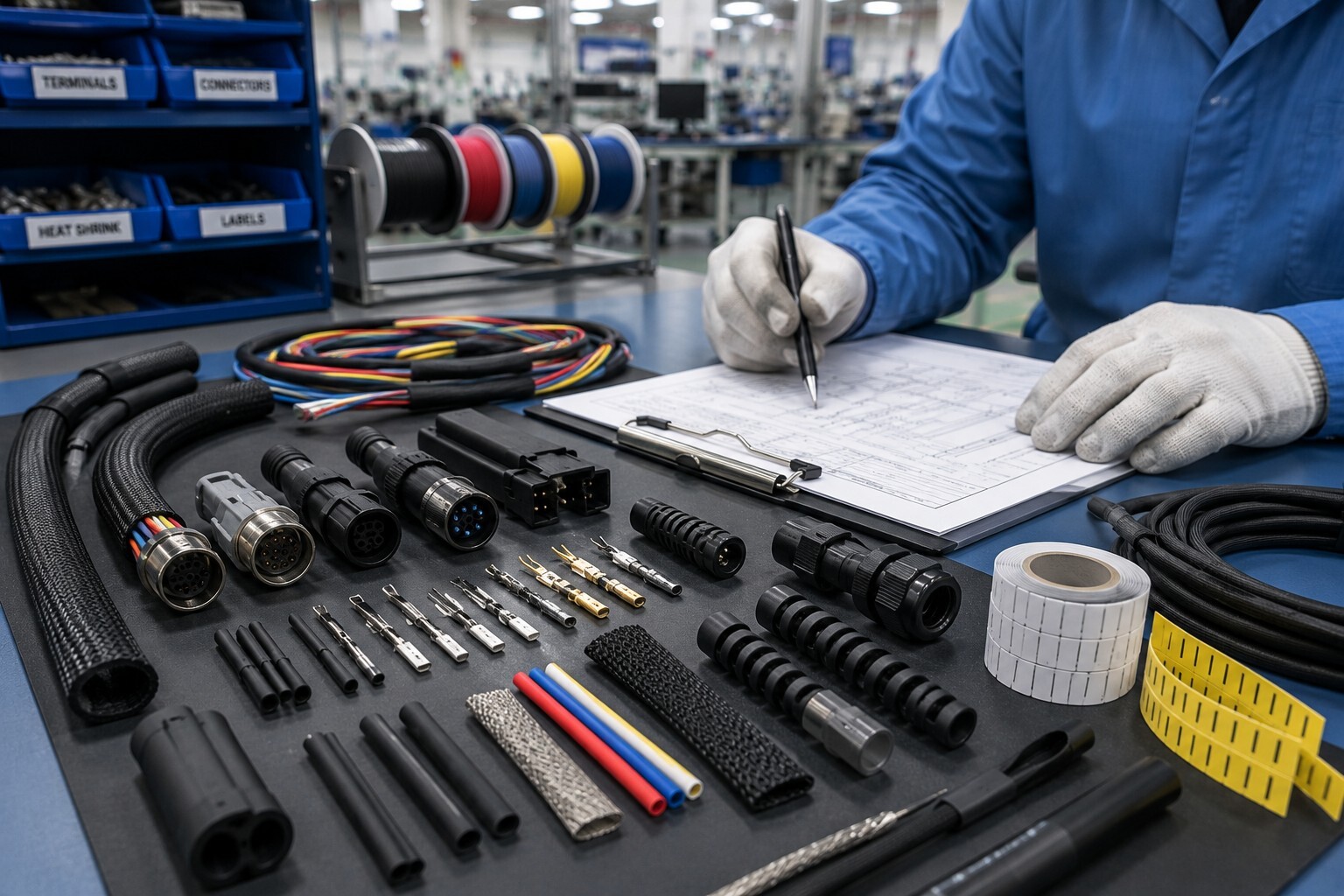
- Molded boots
- Flexible overmolded transitions
- Connector-integrated strain relief
- Heat shrink
- Grommets
- Clamps
- Cable ties
- Sleeving
- Proper bend radius planning
- Mechanical support within the final product
Overmolding and strain relief should also be reviewed alongside routing, bend radius, and strain relief strategies, especially when cables are used in compact or demanding applications.
Why These Design Features Matter
Many cable assembly failures do not occur in the middle of the cable. They occur where the cable transitions into a connector, housing, or termination area. These locations are more likely to experience bending, pulling, twisting, or repeated movement.
For OEMs, that can create several problems:
- Product reliability issues
- Field service calls
- Warranty claims
- Intermittent electrical failures
- Installation problems
- Customer dissatisfaction
- Production delays if the issue is found late
Adding overmolding or strain relief during the design stage can help reduce these risks before the assembly moves into production.
Key Design Considerations for OEMs
Application and Use Environment
The first question is how and where the cable assembly will be used. A cable inside a protected enclosure may not need the same level of protection as a cable used in industrial equipment, transportation systems, outdoor devices, or frequently handled electronics.
OEMs should consider exposure to vibration, moisture, chemicals, abrasion, temperature changes, cleaning agents, flexing, and repeated connection cycles.
Bend Radius and Flex Points
Bend radius is a critical part of strain relief design. If a cable is forced to bend too sharply near the connector, stress can build up at the termination point. A proper strain relief design helps guide the cable into a more gradual bend and reduces the chance of conductor fatigue.
This is especially important in tight spaces where cable routing is constrained by the product design.
Material Selection
Overmolding materials should be selected based on flexibility, durability, temperature resistance, chemical resistance, bonding performance, and the desired feel of the finished assembly.
The material must also be compatible with the cable jacket and connector. Poor material compatibility can lead to weak bonding, cracking, or premature wear.
Material decisions may also require review of relevant certification or suitability considerations, such as UL wire and cable guidance.
For related material selection considerations, Sanbor’s article on cable assembly materials covers connectors, shielding, jackets, and strain relief decisions that can also apply to overmolded cable assembly programs.
Connector and Cable Compatibility
Not every connector or cable is ideal for overmolding. OEMs should confirm that the selected connector, cable jacket, and strain relief design can be manufactured consistently at the required production volume.
A manufacturing partner can help identify potential issues before tooling or production decisions are finalized.
Testing Requirements
Testing should be defined early. Depending on the application, the cable assembly may require continuity testing, pull testing, flex testing, environmental testing, visual inspection, or functional testing.
Depending on the application, OEMs may also reference IPC/WHMA-A-620E requirements for cable and wire harness assemblies when evaluating workmanship, inspection, and acceptance criteria.
Clear testing requirements help ensure that the overmolding and strain relief design supports the final product’s performance expectations.
How Early Supplier Input Helps
Overmolding and strain relief decisions should not be treated as last-minute additions. They affect tooling, materials, assembly methods, testing, lead times, and cost.
By involving a cable assembly manufacturer early, OEMs can identify design risks, evaluate material options, improve manufacturability, and avoid costly changes later in the process.
These decisions are also part of a broader design for manufacturability review before production begins.
A qualified manufacturing partner can help answer questions such as:
- Is overmolding necessary for this application?
- What strain relief method makes the most sense?
- Are the connector and cable compatible with the design?
- Will the assembly be easy to test and manufacture?
- Can the design scale efficiently into production?
Final Takeaway
Cable overmolding and strain relief play an important role in reliable cable assembly design. They help protect vulnerable connection points, reduce mechanical stress, improve durability, and support consistent performance in demanding applications.
For OEMs, the best results come from evaluating these design considerations before production begins. The right decisions can reduce risk, improve manufacturability, and support long-term product reliability.
If your team is designing or sourcing custom cable assemblies, Sanbor Manufacturing can help review your requirements, evaluate overmolding and strain relief options, and support a scalable path to production. Contact Sanbor Manufacturing to discuss your project.
FAQ: Cable Overmolding and Strain Relief
What is cable overmolding?
Cable overmolding is the process of molding material over a cable, connector, or termination area to create a more durable finished assembly. It can help improve strain relief, sealing, handling, appearance, and protection against environmental exposure.
Why is strain relief important in cable assemblies?
Strain relief helps reduce mechanical stress where a cable enters a connector, housing, or termination point. Without proper strain relief, pulling, bending, twisting, or vibration can damage conductors, insulation, crimps, solder joints, or terminals.
When should OEMs consider overmolded cable assemblies?
OEMs should consider overmolded cable assemblies when the product requires added durability, frequent handling, environmental protection, improved sealing, or a more rugged connector transition. Overmolding is often useful for industrial equipment, transportation systems, medical devices, communications hardware, and other demanding applications.
What are common types of cable strain relief?
Common strain relief methods include molded boots, overmolded transitions, connector-integrated strain relief, heat shrink, grommets, clamps, cable ties, sleeving, and mechanical support within the final product. The best option depends on the cable size, connector type, routing path, movement, and operating environment.
How does bend radius affect cable assembly reliability?
Bend radius affects how much stress is placed on the conductors, insulation, and connector transition area. If a cable bends too sharply, it may experience conductor fatigue, insulation damage, signal issues, or premature failure. Proper bend radius planning helps reduce stress and improve reliability.
How can OEMs improve cable assembly reliability?
OEMs can improve cable assembly reliability by reviewing overmolding, strain relief, bend radius, connector compatibility, material selection, testing requirements, and routing conditions early in the design process. A qualified cable assembly manufacturer can help identify risks before production begins.