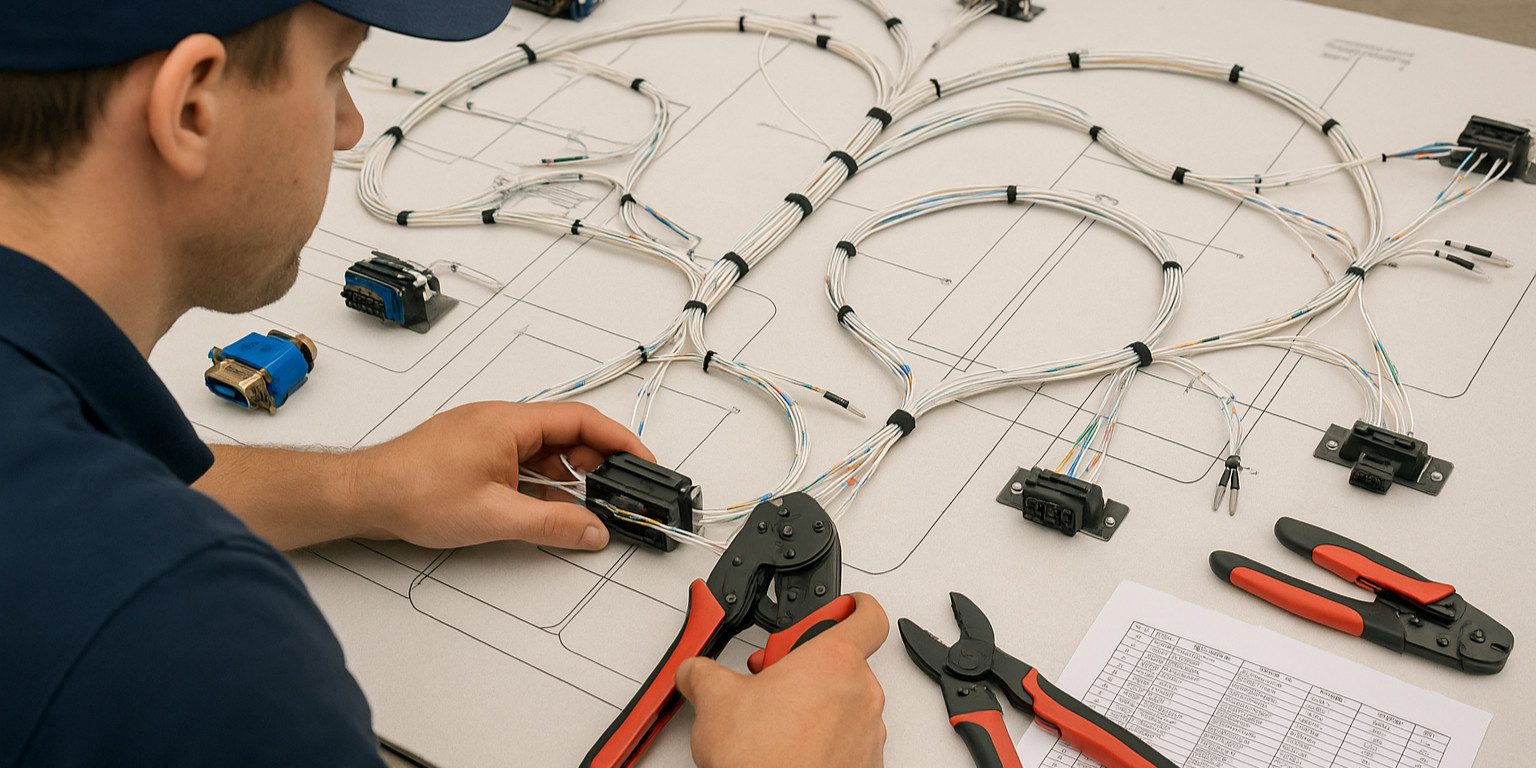
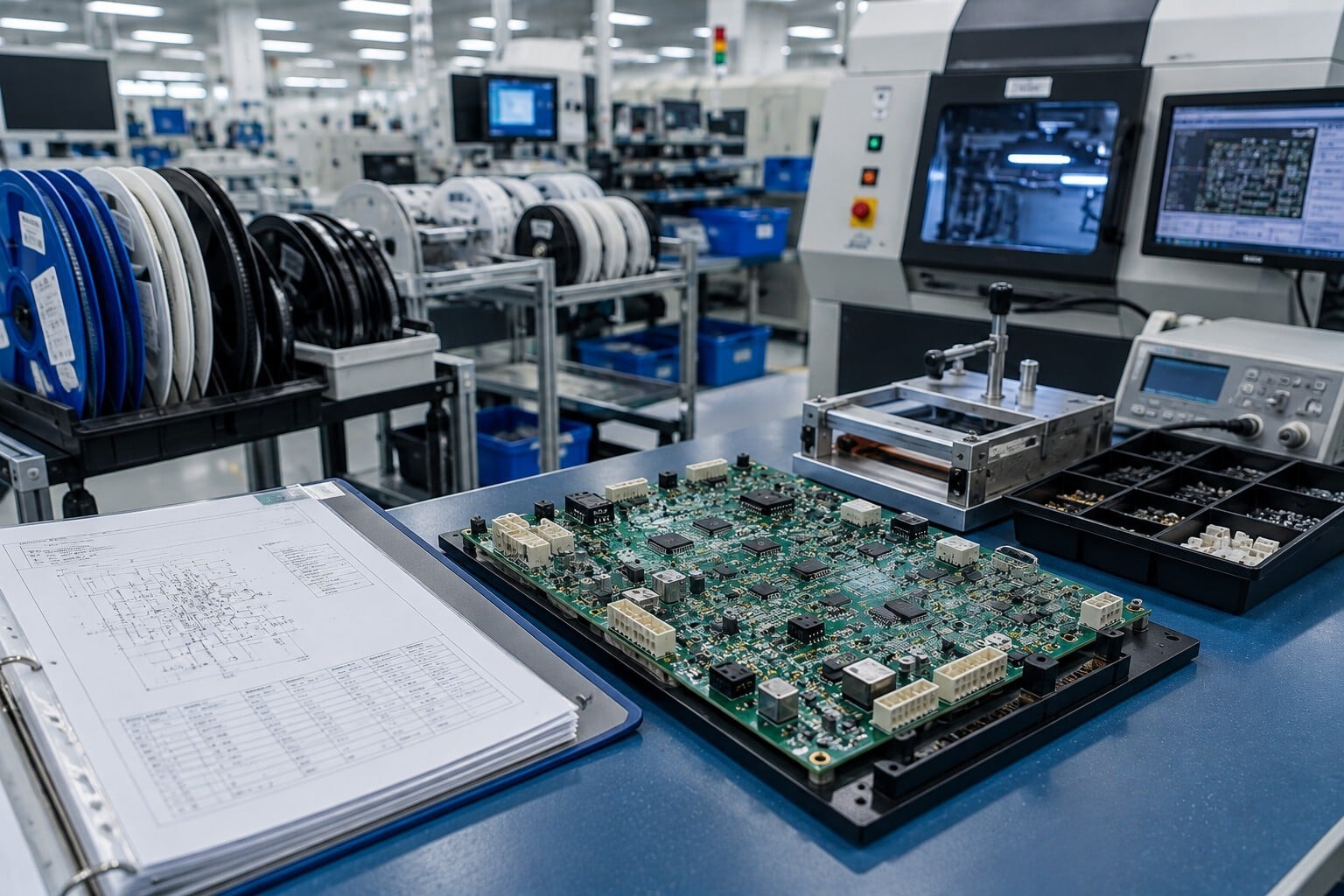
The most useful question to ask a contract manufacturer is: Which parts of this program create avoidable cost, and what would it take to change them?
How can OEMs reduce cable assembly and wire harness manufacturing costs?OEMs can reduce costs by simplifying assembly operations, standardizing suitable components, improving material utilization, matching tooling to production volume, and preventing rework. Evaluating these opportunities with a contract manufacturer helps identify savings while preserving electrical performance, mechanical reliability, and application requirements.
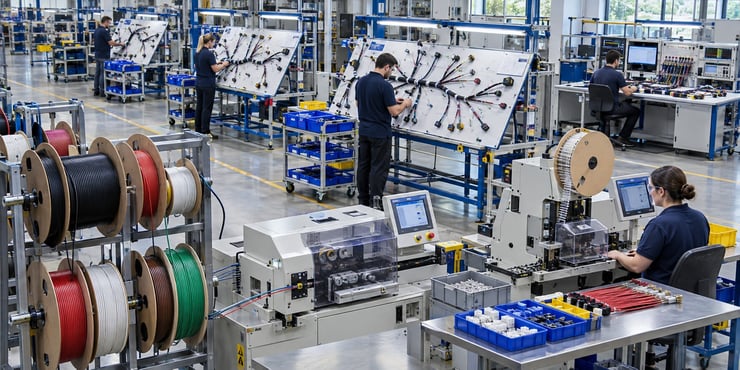
What Drives Cable Assembly and Wire Harness Costs?
Material prices are only one part of the equation. Two assemblies with similar bills of materials can require very different amounts of production labor.
A straight cable with two connectors may be relatively straightforward to process. A branched harness with multiple wire gauges, seals, splices, and breakout locations requires additional preparation, handling, and verification.
Start a cost review with these areas:
| Cost driver | What OEMs should review |
|---|---|
| Wire and cable | Cut lengths, gauge variety, jacket requirements, and material waste |
| Connectors and terminals | Part variety, availability, tooling needs, and termination labor |
| Harness construction | Branches, splices, wrapping, sleeving, and assembly sequence |
| Tooling and setup | Applicators, fixtures, changeovers, and production batch sizes |
| Quality | Scrap, rework, troubleshooting, and repeat testing |
| Delivery and installation | Packaging, freight, inventory, and work required at the OEM’s facility |
This breakdown creates a practical starting point for discussions about custom cable assembly design and sourcing.
1. Reduce Assembly Steps Before Negotiating Component Prices
One of the clearest opportunities is to remove unnecessary work from each build.
Ask your manufacturing partner to review the assembly sequence, including wire preparation, termination, connector loading, routing, protection, and labeling. Look for operations that require repeated handling or difficult access.
Questions worth asking include:
- Can a splice be eliminated through an approved routing change?
- Can connector orientation make assembly and installation easier?
- Does the harness require more wrapping or sleeving than the application needs?
- Are breakout dimensions and tolerances tighter than necessary?
- Can label placement be standardized to simplify production and inspection?
For example, a sleeve that must be threaded over several branches late in assembly may create avoidable handling. Changing the assembly sequence or reviewing an alternative protection method could reduce labor without changing the harness’s function.
The objective is to simplify construction while retaining the routing, protection, serviceability, and performance the product requires.
2. Standardize Connectors, Terminals, and Wire Where Practical
A program with many similar components can carry hidden purchasing and production costs.
Different terminal families may require separate applicators. Multiple wire specifications can increase material handling and changeovers. Unique connectors can introduce purchasing constraints that affect the entire assembly.
Review related part numbers together to identify opportunities to share:
- Connector and terminal families.
- Approved wire specifications.
- Sleeving and protective materials.
- Labels and identification formats.
- Common subassemblies across product variants.
Standardization should reflect application requirements. A connector must still meet the required current rating, mating compatibility, environmental protection, and mechanical performance.
Likewise, two terminals that appear interchangeable may require different tooling or have different wire compatibility. Any substitution should follow the OEM’s engineering approval process.
A useful cost review compares the component price plus the tooling, labor, and qualification work associated with using it.
3. Review Wire Lengths, Protection, and Material Waste
Excess wire length can increase material consumption and make installation more difficult. Lengths that are too short can create strain, fit problems, and scrap.
Review cut lengths against the actual installation, including routing, bend requirements, movement, and service access. Use a physical fit check when appropriate instead of relying entirely on drawing dimensions.
Also examine where protective materials are applied. Full-length sleeving, multiple layers of heat shrink, or extensive wrapping may be necessary in some applications. In others, targeted protection may meet the requirement with less material and assembly time.
For shielded cables, include shield preparation and termination in the review. These operations can require substantial handling. Changes must preserve the grounding and electromagnetic performance of the finished product.
The guiding principle is simple: specify materials and protection based on demonstrated application needs. Engineering approval and appropriate verification should precede production changes.
4. Match Automation and Tooling to the Program
Automation can reduce repetitive work, but its economics depend on volume, product mix, and design stability.
Processes worth evaluating include wire cutting and stripping, crimping, marking, and electrical testing. Harness routing and connector loading may still require considerable manual work, making fixtures and clear work instructions equally important.
Ask your CM to compare the investment with the expected savings.
Illustrative example: If a dedicated fixture costs $3,000 and reduces assembly cost by $0.60 per unit, its simple payback is 5,000 units. The actual decision should also account for maintenance, qualification, design changes, and the program’s remaining life.
A stable, repeating assembly may justify dedicated tooling. A frequently revised harness with many variants may benefit more from flexible fixtures and better setup methods.
5. Prevent Defects Before They Become Finished-Harness Rework
A termination problem becomes more expensive to correct after the wire is loaded, routed, wrapped, and incorporated into a completed harness. Cost reduction should include identifying where defects originate and how early they can be detected.
Review crimp setup, wire preparation, terminal insertion, connector cavity identification, and revision control. Track recurring defects by operation so improvement efforts address the underlying cause.
Where specified, IPC/WHMA-A-620 provides an established framework for cable and wire harness acceptance requirements. The OEM and manufacturer should agree on the applicable requirements and program-specific inspection and test plan.
Testing also needs to match the assembly. Continuity checks alone do not establish every aspect of termination quality or application performance. Sanbor’s guide to wire harness testing and OEM quality expectations explains the different roles of electrical and mechanical verification.
Track first-pass yield, alongside scrap and rework hours. Those measures help show whether a lower quoted price is translating into lower operating cost.
6. Improve Release Quantities and Component Planning
Annual demand and individual production releases affect costs differently.
An OEM may purchase thousands of harnesses annually but release them in small, unpredictable batches. Each batch can require material preparation, tooling setup, first-piece checks, and production scheduling.
Discuss whether a more consistent release schedule could reduce these repeated activities.
For cable and harness programs, useful planning inputs include:
- Expected annual demand by part number.
- Typical release quantities and delivery frequency.
- Forecast changes and seasonal peaks.
- Connector and terminal purchasing constraints.
- Upcoming engineering revisions.
Larger batches are not automatically better. Savings must be weighed against inventory carrying costs and the risk of obsolete material following a design change.
Agree on purchasing commitments, forecast flexibility, and responsibility for excess inventory before increasing order quantities.
7. Include Installation and Delivery in the Cost Comparison
The assembly’s purchase price does not capture all the work required to use it.
A harness that arrives with clear identification, appropriate connector orientation, and packaging suited to the production line may reduce unpacking, sorting, routing, and connection time.
Ask whether the proposed configuration helps your team install it correctly on the first attempt. Compare any additional supplier cost with the work it removes at your facility.
Apply the same discipline when evaluating manufacturing locations. Include freight, duties where applicable, transit inventory, delivery requirements, and transfer expenses. For bulky harnesses, packaging and shipping volume also deserve attention.
The right comparison is the total cost of receiving a conforming assembly and installing it into the finished product.
Turn Cost Opportunities Into a Practical Plan With Sanbor
Sanbor Manufacturing supports OEM cable assembly and wire harness programs. Our capabilities provide a starting point for reviewing how design, sourcing, and production decisions affect program cost.
For a productive discussion, bring your current drawings, bill of materials, annual volumes, release schedule, and test requirements. Include recurring issues such as difficult installation, scrap, rework, or component shortages.
Ask for each proposed improvement to identify:
- The expected recurring savings.
- Any tooling or qualification expense.
- Required engineering approvals.
- Implementation timing and estimated payback.
This makes it easier to prioritize improvements and verify their results after implementation.
Looking to reduce costs in an existing program or prepare a new design for production? Contact Sanbor Manufacturing to discuss your cable assembly or wire harness requirements and opportunities for a more efficient build.
Frequently Asked Questions
What factors have the biggest impact on wire harness manufacturing costs?
Key factors include connector and terminal selection, wire specifications, termination count, branch complexity, protective materials, assembly labor, testing, and production quantities. Their relative impact varies by design, so OEMs should review both material costs and the operations required to build each harness.
Can cable assembly costs be reduced without changing the design?
Yes. Potential improvements include better material utilization, more efficient setup, improved fixtures, reduced rework, and better production scheduling. Savings depend on the existing process. Changes to specified materials, components, or construction require the appropriate OEM approval.
When does automation make sense for wire harness manufacturing?
Automation makes sense when repeatable operations and sufficient production volume justify the equipment, tooling, setup, and maintenance costs. Wire preparation and crimping are common candidates. Product variety, design stability, and remaining program life also influence the decision.
What should an OEM provide for a cable assembly cost review?
Provide current drawings, the bill of materials, approved component alternatives, annual demand, release quantities, testing requirements, and delivery expectations. Include known quality or installation problems so the manufacturer can evaluate costs beyond the assembly’s purchase price.