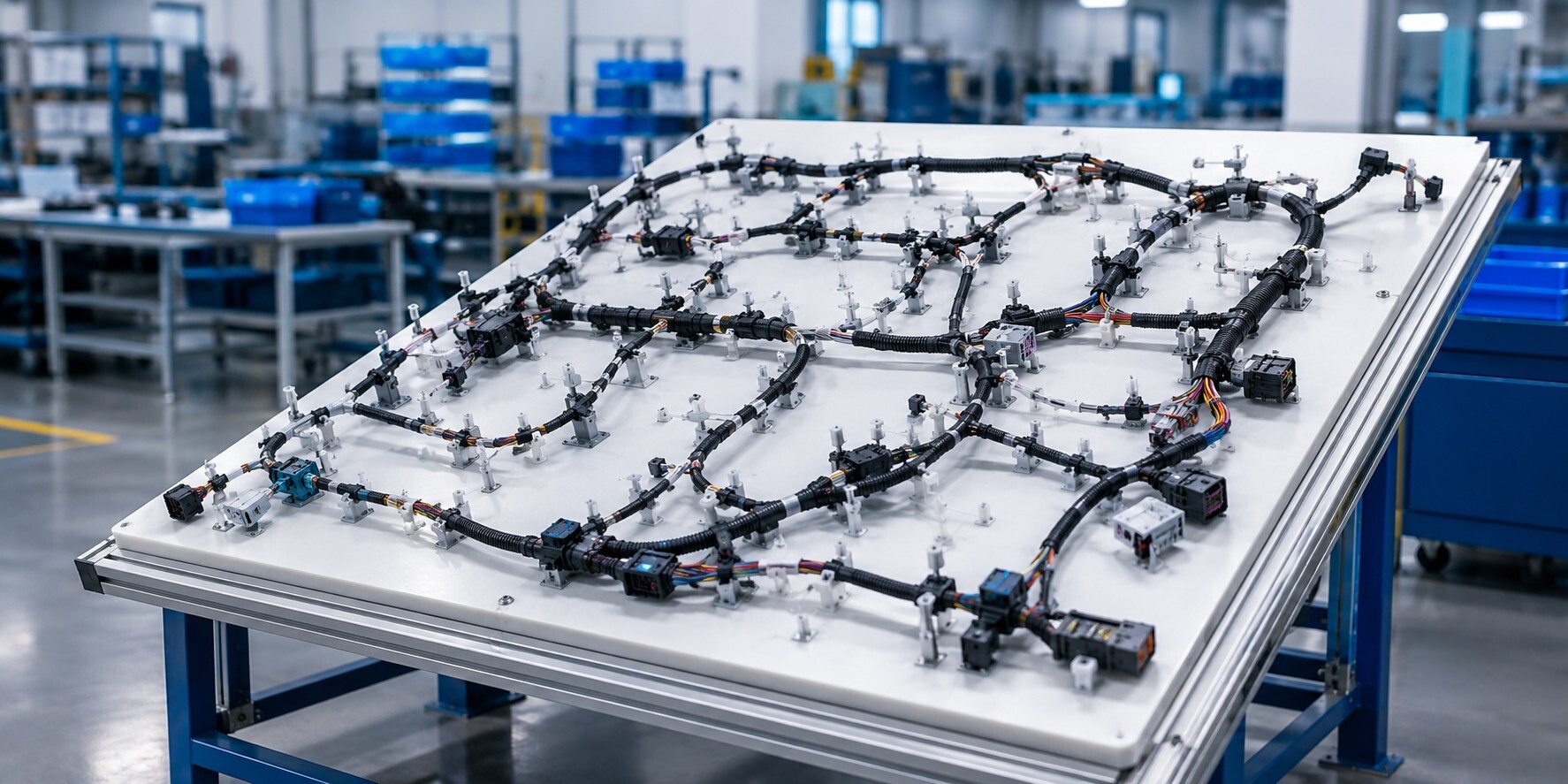
A strong product design does not guarantee a smooth production launch. For OEMs building electronic products, the quality of the printed circuit board assembly process can directly affect product performance, reliability, cost, and time to market.
That is why choosing a PCBA contract manufacturing partner is a strategic decision that affects engineering, supply chain, quality, production planning, and customer satisfaction.
Sanbor Manufacturing supports OEMs with PCBA manufacturing, cable assembly, wire harness assembly, and related contract manufacturing services across multiple industries.
What You'll Learn
In this article, we’ll cover:
- What PCBA contract manufacturing includes
- Why supplier selection matters for OEM electronics programs
- Key capabilities to evaluate in a PCBA manufacturer
- How testing, documentation, and sourcing affect production outcomes
- Why integration with cable assemblies and wire harnesses can simplify supplier management
What is PCBA Contract Manufacturing?
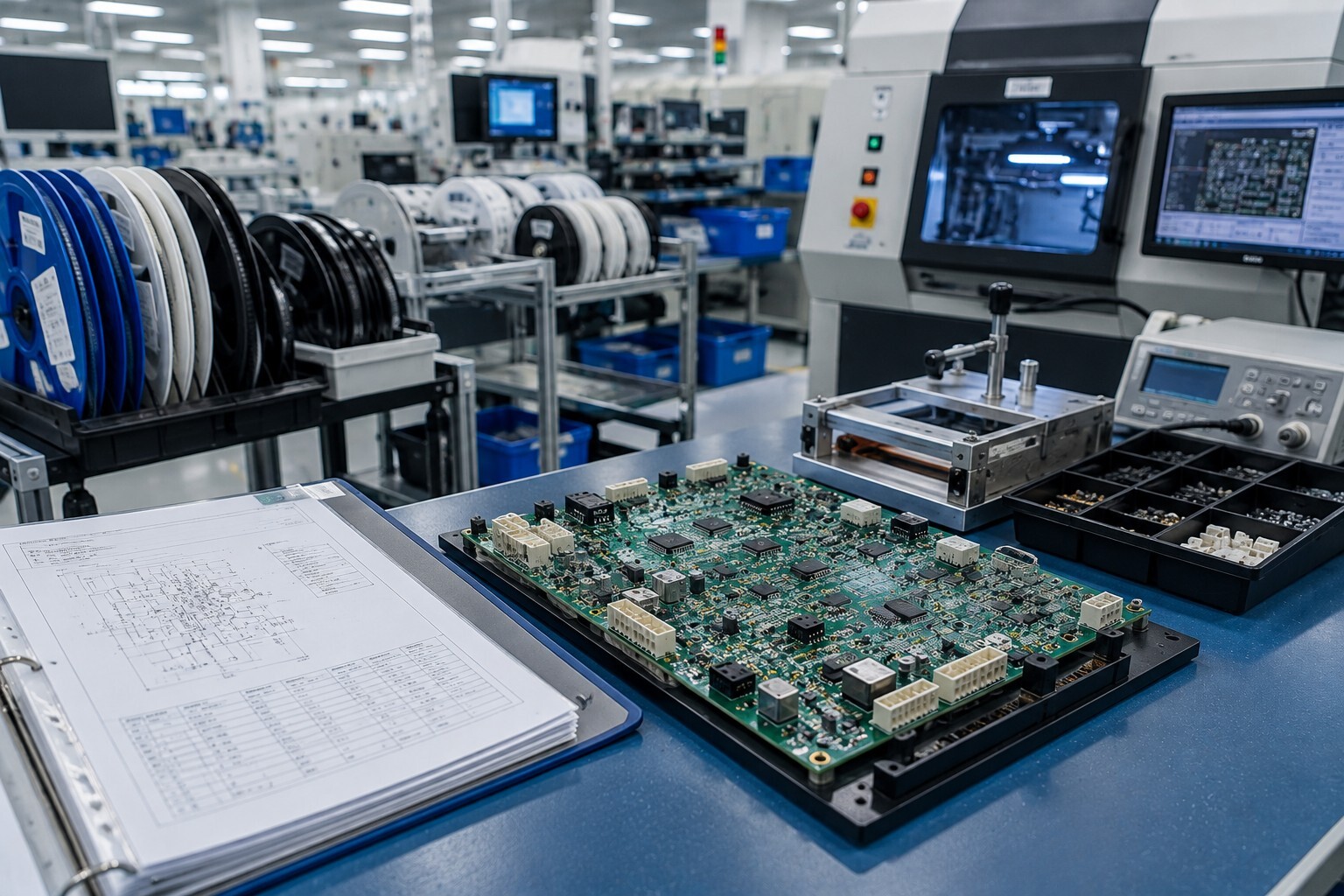
PCBA contract manufacturing is the outsourced production of printed circuit board assemblies. Depending on the program, it may include component sourcing, SMT assembly, through-hole assembly, mixed technology assembly, inspection, testing, programming, documentation, packaging, and production support.
For OEMs, the right partner helps ensure that the product can be built consistently, tested properly, sourced reliably, and scaled efficiently.
Why PCBA Partner Selection Matters
PCBA quality issues can be difficult and expensive to diagnose. A defect may not appear until final assembly, field use, or customer deployment. Component substitutions, soldering issues, poor documentation, inadequate test coverage, and inconsistent process controls can all create risk.
A qualified PCBA contract manufacturer should help OEMs answer important questions before production begins:
- Are all components available and approved?
- Are there long-lead or obsolete parts in the BOM?
- Is the board designed for manufacturability?
- What inspection and test methods are required?
- Can the supplier support production ramp-up?
- Can the supplier support related assemblies or final integration?
For OEMs preparing to move from design to production, Sanbor’s article on design for manufacturability explains how early manufacturing input can help reduce cost, improve quality, and avoid production delays.
Key Capabilities to Evaluate in a PCBA Contract Manufacturer
1. Technical Manufacturing Capability
The first requirement is the ability to build the assembly correctly and consistently. OEMs should understand whether the manufacturer can support the board complexity, component types, production volume, and required process controls.
This may include surface mount assembly, through-hole assembly, mixed technology boards, fine-pitch components, connectors, mechanical hardware, and secondary operations required for the final product.
2. Component Sourcing and BOM Risk Management
PCBA programs are highly dependent on component availability. A single long-lead component can delay production. An obsolete component can force a redesign. An unapproved substitution can create quality or compliance concerns.
A strong PCBA partner should help identify sourcing risks early and communicate clearly about alternates, lead times, minimum order quantities, lifecycle status, and approval requirements.
This is especially important for OEMs managing long-life industrial, medical, aerospace, communications, or other quality-sensitive products.
3. PCBA Testing and Inspection Capabilities
Testing should be planned before production. Depending on the product and risk profile, PCBA testing may include visual inspection, automated optical inspection, in-circuit testing, flying probe testing, functional testing, programming verification, or other application-specific test steps.
The goal is to catch defects before they move downstream into final assembly or customer use. PCBA quality expectations may also be informed by standards such as IPC-A-610 acceptability standards for electronic assemblies.
If your PCBA program is moving toward production or supplier transfer, Sanbor Manufacturing can help evaluate your requirements, sourcing needs, testing expectations, and production goals.
4. Quality Systems and Documentation
OEMs should evaluate how the manufacturer controls process documentation, revision history, inspection records, test data, nonconformances, and corrective actions.
For industries with higher quality expectations, documentation is not optional. It supports traceability, repeatability, customer confidence, and audit readiness.
Sanbor’s industrial contract manufacturing capabilities support programs where reliability, production consistency, and supplier communication are critical.
5. Scalability from First Article to Production
A PCBA supplier may be able to support early builds but struggle with repeatable production. OEMs should understand how the partner manages ramp-up, capacity planning, material availability, inspection, test fixtures, packaging, and ongoing production support.
This is especially important for companies moving from engineering builds to commercial production.
6. Integration with Cable Assemblies and Wire Harnesses
Many electronic products do not stop at the circuit board. PCBAs often connect to cable assemblies, wire harnesses, sensors, motors, displays, power supplies, or enclosures.
When PCBAs, cable assemblies, and wire harnesses are sourced separately, OEMs may face additional handoffs, communication gaps, and integration issues. Sanbor has previously highlighted the value of supplier consolidation for PCBA, cable assembly, and wire harness manufacturing as a way to simplify supplier management and reduce production risk.
Questions OEMs Should Ask Before Selecting a PCBA Partner
Before awarding a PCBA program, OEMs should ask:
- What PCBA volumes and complexity levels do you support?
- How do you manage component sourcing and BOM risk?
- What inspection and testing methods are available?
- How do you handle revision control?
- Can you support cable assemblies or wire harnesses connected to the PCBA?
- What documentation is provided?
- Can you support production transfer or ramp-up?
- How do you communicate lead-time or sourcing issues?
These questions help separate a tactical board assembler from a true production partner.
Final Takeaway
PCBA contract manufacturing is a critical part of electronics production and the right partner should support more than assembly. OEMs need a manufacturer that can help manage sourcing risk, quality, testing, documentation, scalability, and integration with related assemblies.
For OEMs evaluating a new PCBA production partner, Sanbor Manufacturing offers contract manufacturing support across PCBA, cable assembly, wire harness assembly, and related services designed to help simplify production and reduce supply chain risk.
If your team is evaluating a PCBA supplier, transferring production, or preparing for a new manufacturing program, contact Sanbor Manufacturing to discuss your requirements.
FAQ: PCBA Contract Manufacturing
What is PCBA contract manufacturing?
PCBA contract manufacturing is the outsourced production of printed circuit board assemblies. It may include component sourcing, SMT assembly, through-hole assembly, inspection, testing, programming, documentation, packaging, and production support.
What should OEMs look for in a PCBA manufacturer?
OEMs should look for a PCBA manufacturer with technical manufacturing capability, component sourcing support, quality systems, testing and inspection processes, documentation controls, production scalability, and clear communication. The right partner should be able to support both the board-level assembly and the broader production needs of the OEM.
Why is PCBA testing important?
PCBA testing is important because defects may not be visible until final assembly, product testing, or field use. Testing helps identify issues such as solder defects, incorrect components, opens, shorts, programming errors, or functional failures before the product reaches the customer.
Can one manufacturer support PCBA, cable assemblies, and wire harnesses?
Yes. Many OEMs benefit from working with one contract manufacturing partner that can support PCBA manufacturing, cable assembly, and wire harness assembly. This can reduce supplier complexity, improve communication, simplify integration, and support more consistent quality across related assemblies.
How can a PCBA manufacturer help reduce supply chain risk?
A PCBA manufacturer can help reduce supply chain risk by reviewing BOMs, identifying long-lead or obsolete components, communicating sourcing constraints, managing approved alternates, supporting production planning, and helping OEMs avoid delays caused by component availability or supplier issues.
When should OEMs involve a PCBA contract manufacturing partner?
OEMs should involve a PCBA contract manufacturing partner before production requirements are finalized, especially when preparing for a new product launch, supplier transfer, cost reduction initiative, or production ramp. Early input can help identify manufacturability, sourcing, testing, and documentation needs before they create delays.